The conclusion is unavoidable: EV charging cannot mature as an energy market if pricing remains static, manually adjusted and publicly announced like a retail campaign. It must become dynamic.
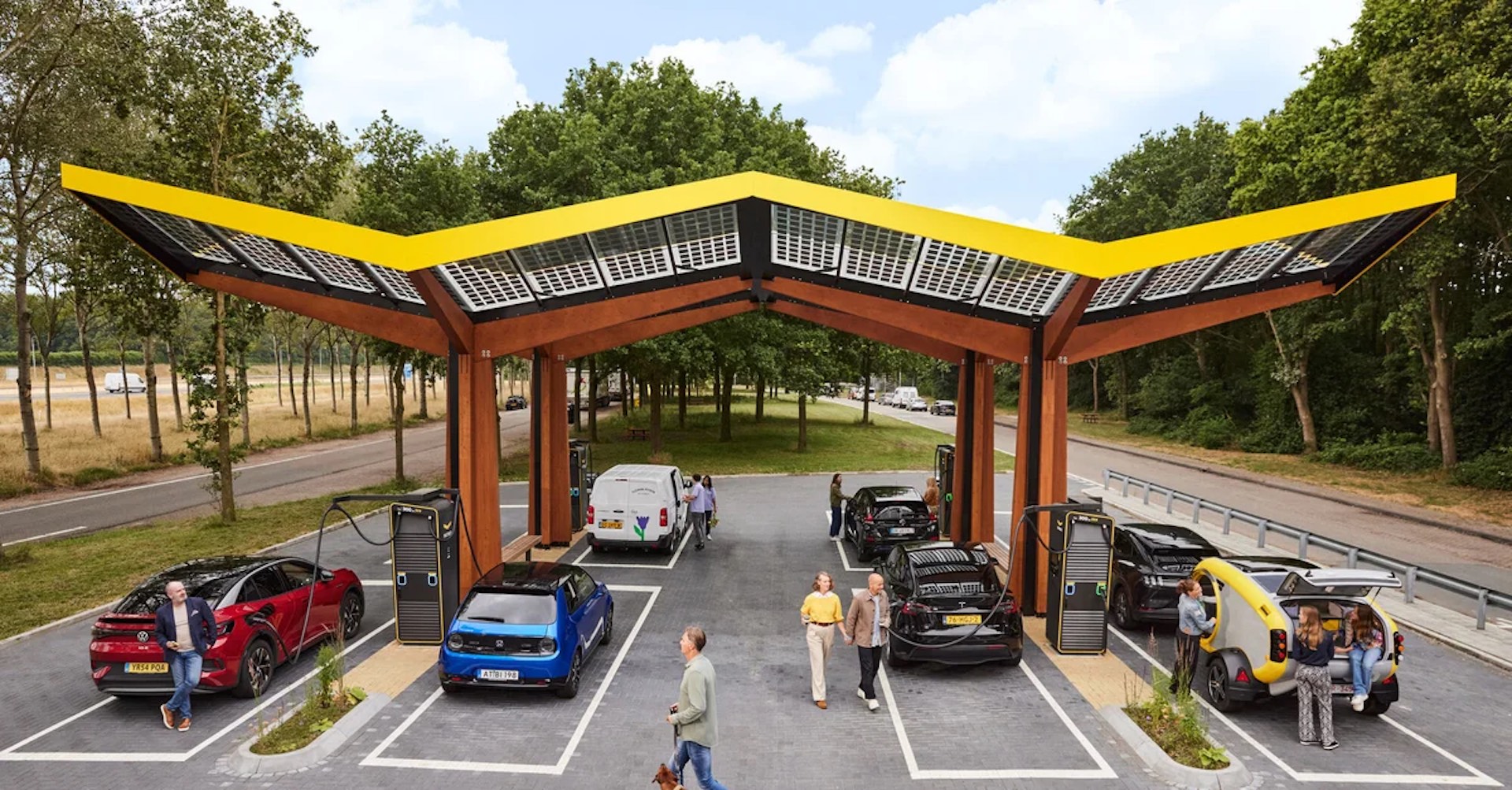
This week, as reported by Electrive, Fastned reduced its ad-hoc charging price in Germany to €0.69 per kWh. On the surface, this appears to be a positive move for drivers. Lower prices are welcome. Competition is healthy.
But the deeper issue is not the level of the price.
It is the structure of pricing itself.
The fact that a major operator must publicly announce price cuts — rather than adjust pricing dynamically in response to wholesale energy markets, grid conditions or demand patterns — reveals a structural limitation in the current EV charging model.
The Static Pricing Problem
Today, most EV charging networks operate with semi-static tariffs. Prices are set, updated occasionally and often announced through press releases or platform notifications. Adjustments may happen quarterly or in response to dramatic market shifts, but they are not typically adjusted daily — let alone hourly.
This is fundamentally different from petrol markets.
Petrol stations adjust prices daily. Sometimes multiple times per day. Wholesale inputs change. Competitive positioning shifts. Demand patterns fluctuate. The retail price reflects that movement almost immediately.
EV charging, despite being electricity-based, rarely behaves this way.
The result is a market that does not fully reflect energy dynamics.
Operators may hesitate to increase prices quickly when wholesale costs rise. They may delay reductions when energy becomes cheaper. Communication becomes a reputational concern rather than a market mechanism.
This creates inefficiencies for both operators and drivers.
Energy Is a Commodity — Charging Should Behave Like One
Electricity prices fluctuate constantly. Wholesale markets move daily. Grid conditions vary by region and time of day. Renewable generation can create surplus supply at certain hours and scarcity at others.
Yet public EV charging prices often remain flat across weeks or months.
This disconnect limits optimisation.
If charging prices could respond dynamically:
- Off-peak charging could become cheaper in real time.
- Peak demand periods could be priced appropriately.
- Grid balancing incentives could be integrated transparently.
- Operators could protect margins without public announcements.
Dynamic EV charging pricing would allow the market to function as an energy market — not as a static retail tariff sheet.
Why This Is an Infrastructure Issue
The limitation is not strategic reluctance. It is infrastructural.
Dynamic pricing requires:
- Real-time tariff propagation across roaming networks.
- Session-level validation against updated price tables.
- Accurate VAT recalculation per transaction.
- Transparent settlement reconciliation.
- Revenue sharing logic that adapts automatically.
Without a coherent financial backbone, dynamic pricing becomes administratively risky. Operators prefer static pricing because it simplifies reconciliation.
In other words, the barrier to dynamic EV charging pricing is not conceptual. It is financial infrastructure.
As we outlined in EV charging settlement layer and EV charging margins, charging is not simply an energy flow. It is a transaction system involving multiple parties.
When settlement is fragmented, pricing must remain simple.
When settlement is unified, pricing can become dynamic.
The Role of the EV Charging Settlement Layer
Dynamic EV charging pricing only works if the settlement layer can process variable tariffs cleanly and predictably.
Each charging session must:
- Apply the correct real-time tariff.
- Record it accurately in the Charge Detail Record.
- Calculate tax correctly.
- Allocate revenue shares without distortion.
- Settle funds without dispute.
If pricing changes daily or hourly, the financial logic must update instantly and reliably across CPOs and Demand Partners.
This is where most ecosystems struggle.
Roaming hubs often focus on connectivity. CSMS platforms focus on charger control. But neither alone guarantees dynamic financial settlement coherence.
That coherence belongs to the settlement layer.
Why This Matters for CPOs
For Charge Point Operators, static pricing introduces rigidity.
Wholesale electricity may rise sharply. Static tariffs compress margins.
Wholesale electricity may fall. Static tariffs create competitive exposure.
In both cases, operators are forced into public announcements and scheduled changes.
Dynamic EV charging pricing would allow operators to adjust gradually and continuously, protecting margin integrity without creating customer shock.
It would also enable more refined competitive positioning. Operators could respond to local demand, site utilisation and time-of-day consumption.
Instead of announcing price reductions, the market would simply reflect conditions.
This is how mature commodity markets operate.
Why This Matters for Demand Partners
For OEMs, fleets, fintech platforms and mobility apps, dynamic pricing introduces opportunity.
Transparent, real-time tariffs enable:
- Time-based incentives for users.
- Smart charging recommendations.
- Predictable revenue sharing aligned with actual market conditions.
If charging is to become truly embedded in financial ecosystems — as discussed in charging-as-a-service and EV roaming hub — then pricing must behave like financial markets.
Demand Partners do not benefit from opaque, static pricing structures that require manual intervention. They benefit from predictable, transaction-based logic that adapts automatically.
Dynamic EV charging pricing enables exactly that.
NetworkCore and Dynamic Pricing Infrastructure
NetworkCore operates at the financial backbone of EV charging.
We are not a charger operator. We are not a pricing authority. We are the transaction infrastructure layer that allows charging markets to function coherently.
Dynamic EV charging pricing requires:
- Instant tariff synchronisation.
- Session-level validation.
- Automated VAT and FX recalculation.
- Revenue split adjustments in real time.
- Predictable payout cycles despite variable pricing.
This is only possible when roaming and settlement are unified within a single transaction architecture.
NetworkCore enables this.
- Operators maintain control over public pricing.
- Tariffs can be adjusted dynamically.
- Settlement logic remains compliant and audit-ready.
- Demand Partners receive transparent reporting aligned with real-time pricing.
No manual recalibration.
No scheduled tariff announcements required.
No structural lag between energy markets and charging prices.
The Future: From Static Retail to Dynamic Market
Fastned's price adjustment is not the issue. It is a symptom.
The EV charging industry is still transitioning from early-stage infrastructure deployment to market maturity.
In early stages, simplicity favours growth. Static tariffs are easy to communicate. Manual adjustments are manageable.
But as the ecosystem scales — as vehicle volumes rise, as cross-border roaming expands, as energy markets fluctuate more rapidly — static pricing becomes a constraint.
The future of EV charging is not simply faster chargers or more locations.
It is market alignment.
- Prices that move with energy conditions.
- Settlement that processes variable tariffs seamlessly.
- Infrastructure that allows operators to compete dynamically.
Dynamic EV charging pricing will not be optional in a mature market. It will be expected.
Final Conclusion
The recent German price cut highlights an important truth: EV charging pricing today is still largely static and manually adjusted.
That is not how energy markets operate.
It is not how petrol markets operate.
And it will not be how mature EV charging markets operate.
Dynamic EV charging pricing is the logical next step.
But dynamic pricing cannot exist without a robust settlement layer capable of handling real-time tariff changes, revenue allocation and compliance discipline.
NetworkCore provides that infrastructure.
When pricing can move freely and settlement remains coherent, the EV charging market will finally behave like the energy market it truly is.
And that is when electrified mobility becomes not only scalable — but economically optimised.