How to Offer EV Charging in an App: The Definitive Guide for Platforms with Users
Your app already has the asset that matters: users who charge multiple times a week. Here's how to turn that demand into native in-app charging — API or iframe, your choice.

The conclusion first: how to offer EV charging in an app is one of the most overcomplicated questions in mobility right now, and the answer is simpler than the market makes it. Your app already has the asset that matters: users, some of whom drive EVs, all of whom will charge multiple times a week for the lifetime of their vehicles. What you need is a platform that turns that demand into native in-app charging access — at the public CPO tariff, with revenue per session, settled cleanly across jurisdictions, with no infrastructure on your side, and fully compliant. NetworkCore is that platform. The integration is a choice between API and iframe — your call. The result is the same: charging becomes a native feature of your product, earning per session, requiring no operational team to maintain.
The infrastructure question is the wrong question
Most teams asking how to offer EV charging in an app start by reading about charge point hardware, OCPP protocols, CSMS platforms, and roaming hubs. Within a week, they have a fifty-slide internal deck on charging infrastructure architecture and a project plan estimating an 18-month build. This is the wrong starting point — and it is the reason most apps with EV-driving users have not yet shipped charging as a feature.
Your app is not a CPO. It is not going to operate physical chargers. It is not going to deploy a charging station management system. It is not going to sit on its own balance sheet running multi-jurisdiction VAT compliance for charging sessions. None of this is what your product was built for, and none of it is required to offer charging to your users. The infrastructure already exists — operated by Charge Point Operators across the markets your users drive in — and the only commercial question is how to connect your demand to that supply through a layer that handles the transaction cleanly.
This is the working definition of how to offer EV charging in an app: connect your demand to the existing supply through a platform that absorbs the transactional complexity, and let your app earn per session on the activity your users were going to perform regardless. Everything else is a distraction.
What "the right platform" actually does
The platform that makes how to offer EV charging in an app a solved problem rather than an 18-month project does several things at once, and understanding what each of them is helps clarify what you are looking for.
It connects your app to a wide network of CPOs through a single integration. You do not negotiate with individual operators. You do not build separate connections to each one. The platform's CPO network grows continuously, and your app gains access to every new addition automatically.
It captures payment from your users in real time, at the CPO's transparent public tariff, with no markup inserted between the charger and the driver. The price your user sees at the station is the price they pay. Trust is preserved. Repeat usage compounds.
It allocates revenue per session — your share, the CPO's share, the platform's small commission — automatically, with full audit evidence per transaction. You earn on every session your users complete through the integration, without invoicing anyone or reconciling anything.
It settles to all parties on a short, predictable cycle — typically within 48 hours — across multiple currencies where the network spans markets. Your revenue arrives. The CPO's revenue arrives. The platform's commission is taken transparently per session.
It handles the compliance layer across every jurisdiction where sessions take place: VAT calculation per session per fee type, invoicing in the format each tax authority requires, audit-ready records for every transaction, AML and KYC obligations for every participant. None of this lands on your engineering team or your finance team. It is absorbed by the platform.
It allows for bilateral commercial flexibility on top of the public pricing baseline. Where it makes commercial sense, your app can negotiate preferred rates with specific CPOs — without disturbing the public tariff that other drivers see, and without breaking the transparency that makes the network's pricing model trustworthy. The CPO's public price remains the baseline. Negotiated arrangements layer on top of it for the specific Demand Partners who agreed them. This is unusual functionality. It is also the kind of capability that distinguishes a real charging platform from a referral mechanism dressed up as one.
When a platform delivers all of this, how to offer EV charging in an app stops being an infrastructure question. It becomes an integration question — and that is a much smaller problem.
API or iframe — the integration is your choice
NetworkCore offers two integration paths, and the right one depends on how you want charging to feel inside your product.
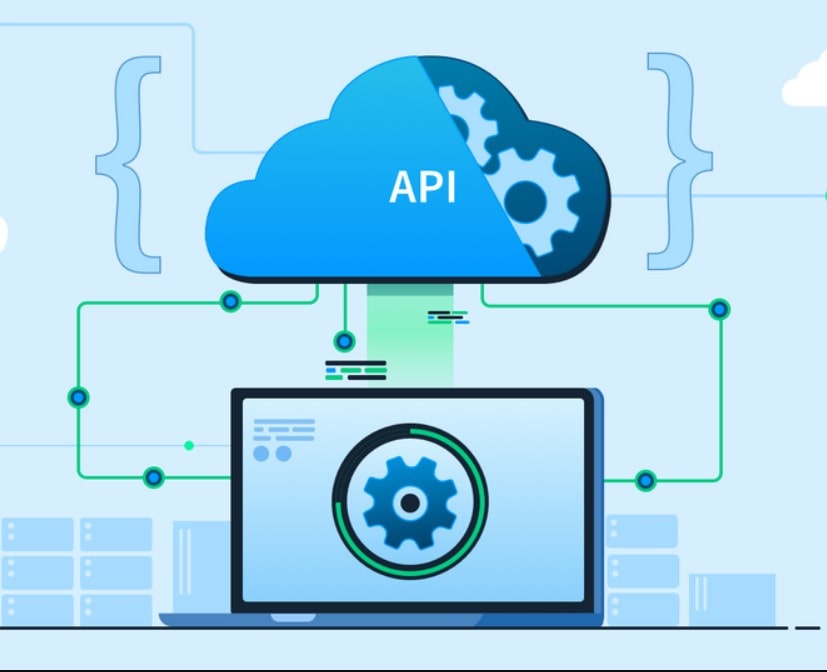
API integration. For platforms that want full control over the user experience — the charging interface, the visual design, the placement within the app's flow, the tone of every interaction — the NetworkCore API exposes every function the integration needs. Network discovery, station listings, real-time pricing and availability, session initiation, payment authorisation, session management, and the full reporting layer. Your team builds the in-app charging experience exactly as you want it. NetworkCore handles everything that happens beneath that interface — the routing, the payment flow, the settlement, the compliance — and surfaces the data your product needs through clean, well-documented endpoints. This is the right path for OEMs building in-car HMI integrations, for super-apps that have strong UX standards, for fintechs that want charging to feel as native as their other product layers, and for any team with the engineering capacity to build their own front-end and the design conviction to make it match the rest of their app.
Iframe integration. For platforms that want to ship in days rather than weeks, NetworkCore provides a complete drop-in front-end — a fully functional, brand-customisable charging interface delivered as an iframe component that sits inside your app and handles every part of the user experience out of the box. Station discovery, session initiation, payment, completion, history, support — all of it lives inside the iframe and inherits your brand presentation. Your team integrates the component, configures the styling to match your app, and ships. This is the right path for fleet platforms that want to deploy charging fast, for fintechs and wallets that want to add a mobility layer without an engineering project, for car rental platforms looking to enable EV options at the point of booking, and for any team that prefers to focus on demand growth rather than on building a charging UI.
Both paths produce the same operational outcome: charging works inside your app, your users charge, the revenue arrives, the compliance is handled. The only difference is how much front-end work you choose to do. How to offer EV charging in an app is, in this respect, fully a question of your team's preference — not a constraint imposed by the platform.
This is one of the things that makes NetworkCore unusual in the category. Most platforms claiming to support charging integrations offer one path or the other and treat the choice as architectural. We treat it as a Demand Partner decision. You know your product better than we do. You should pick the integration that fits how you ship.
The other reading materials worth pairing with this post: Embed EV Charging Into App explains the strategic rationale for making this move at all; EV Charging as a Service Platform defines what a real EV charging platform looks like and what most of the things called this are not; Offer EV Charging Without Owning Chargers makes the case for demand-side participation without infrastructure; EV Charging as a Revenue Stream explains why the per-session economics actually compound to something meaningful at scale; and Monetising In-Car Charging applies the same logic to OEM distribution.
What shipping actually looks like
A platform asking how to offer EV charging in an app typically expects an 18-month plan and is surprised by how compressed the real timeline is.
Day one is a commercial conversation. NetworkCore confirms the markets the platform's users operate in, the CPO coverage available in those markets, the integration path the platform wants to take, and the commercial terms that apply to the partnership.
The integration period that follows depends on the path. An iframe deployment can be live within 60 minutes, including styling and brand customisation. An API integration is typically a little longer depending on how much custom UI the platform's team is building and how rich the in-app charging experience needs to be. Either way, the platform is shipping charging in hours, not months.
Once the integration is live, the operational picture is straightforward. Users charge. Sessions flow through the integration. The CPO's public tariff is applied. Payment is captured. Revenue is split per session. Settlement runs on its 48-hour cycle. Invoices are generated automatically per jurisdiction. Compliance evidence is archived. The platform's revenue share lands in its account on the agreed schedule. No team has been hired. No infrastructure has been built. No operational debt has been acquired.
Users start using the feature, sessions compound, and the revenue line begins to scale with the EV adoption rate within the platform's user base. A platform with 100,000 EV-driving users averaging two sessions a week is processing 200,000 charging transactions weekly through its integration — every one of them earning per session, every one of them settled cleanly, every one of them generating data the platform can use to understand its users' mobility behaviour better than it could before.
This is how to offer EV charging in an app in its operational form: a single decision, a short integration, a feature that ships, and a revenue line that compounds.
The decision in front of you
The platforms that have already integrated charging through a real EV charging as a service platform are earning per session on activity their users were going to perform regardless. The ones that are still planning their own infrastructure, evaluating CSMS vendors, or negotiating bilateral roaming agreements are spending engineering time and capital on a function their app was never supposed to build, while the revenue available on their user base flows to whichever competing interface their drivers find first.
If your app has EV-driving users — even a meaningful minority — you are already in this market whether you have shipped a charging feature or not. Your users are charging. Sessions are happening. The only question is whether your platform is in the financial flow of those sessions or watching them happen elsewhere.
How to offer EV charging in an app is, finally, a decision question rather than a technology question. The technology exists. The platform exists. The integration paths are available. The commercial model is transparent and aligned with your interests. The remaining requirement is that your team makes the decision and starts the conversation.
NetworkCore is ready when you are. API or iframe — your choice. Sessions, revenue, compliance, and settlement — our responsibility, end to end. Reach the team at networkcore.org.