EV Charging as a Revenue Stream: The Cost the OEMs Are Not Counting
EV charging as a revenue stream is real, accessible, and genuinely recurring. The platforms capturing it cleanly are earning without owning infrastructure. The platforms that are not — OEMs in particular — are confusing revenue with income.
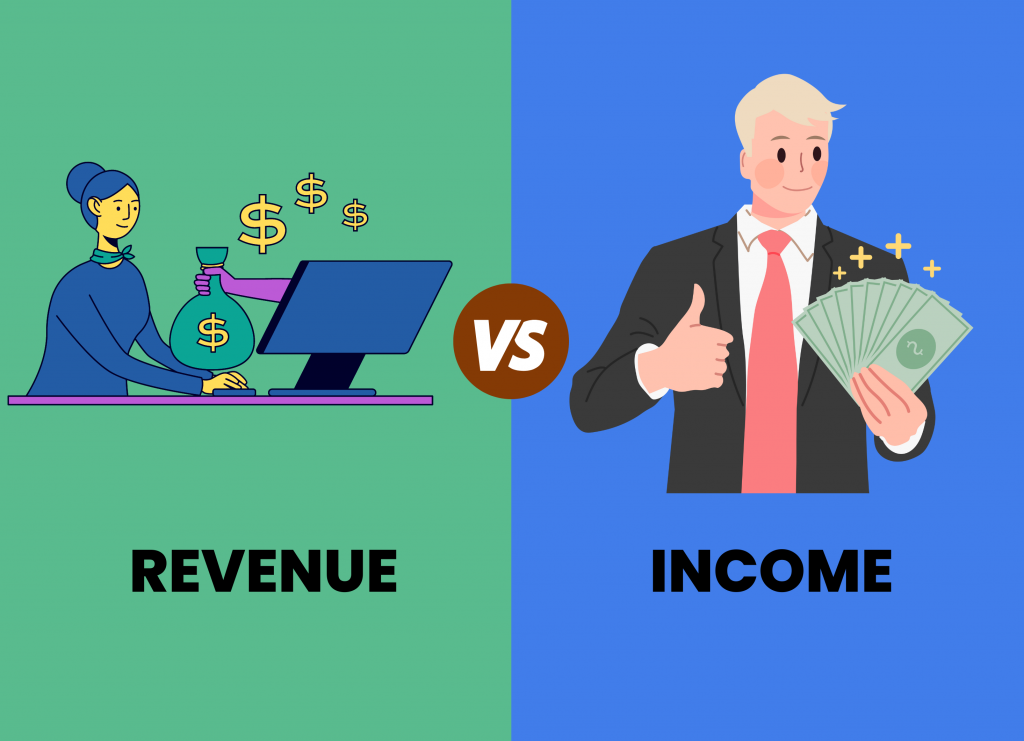
The conclusion first: EV charging as a revenue stream is real, accessible, and genuinely recurring. The platforms capturing it cleanly are earning without owning infrastructure, without managing complexity, and without defending proprietary positions that cost more to maintain than they produce. The platforms that are not — OEMs in particular — are confusing revenue with income. They are booking charging revenue on the top line while the costs of building it, operating it, and keeping it closed quietly hollow out everything below. The difference between the two approaches is not strategy. It is arithmetic.
Revenue Is Not Income
This distinction matters and it is rarely made explicitly enough in conversations about EV charging as a revenue stream.
Revenue is the gross number. It is what shows up in the press release — charging revenue grew 40%, sessions up year on year, network expanding across markets. These are real numbers and they are not wrong. What they do not show is what it cost to generate them.
Income is what remains after you subtract the cost of producing that revenue. The infrastructure capex. The engineering teams maintaining the proprietary platform. The legal and compliance overhead of operating a payments-adjacent product in multiple jurisdictions. The customer support function for a charging app that is not the driver's first choice but the only one that works with the vehicle. The settlement delays and reconciliation costs that accumulate when the financial layer was not built to handle multi-party transactions at scale. The sessions lost because the network was too narrow and the driver found a competitor's charger instead.
When you look at OEM charging operations through that lens — revenue minus all of it — the picture changes. The number that looked like a healthy business on the top line becomes, in many cases, a net cost dressed up as a revenue strategy.
What OEMs Actually Built
The dominant OEM charging strategy when EV charging became commercially relevant was to own the category. Build the network. Deploy the proprietary protocol. Gate the experience behind the brand. The Tesla model — vertically integrated, end to end, every charger owned and operated — looked like the template worth copying.
There are two problems with that model for the rest of the industry. The first is that Tesla had the brand loyalty, the volume, and the early-mover infrastructure advantage to make it work economically in a way that no other OEM could replicate from a standing start. The second is that even for Tesla, the opening of the Supercharger network to other brands was not a strategic pivot away from their model — it was a recognition that a closed network leaves utilisation and revenue on the table that an open one would capture.
For OEMs that followed the vertically integrated instinct without Tesla's structural advantages, the cost profile has been punishing. A proprietary charging platform requires a software engineering team to build and maintain it. It requires a legal and compliance team to handle the financial transaction layer in every market. It requires a customer support operation for a product — an OEM charging app — that drivers use reluctantly, because their vehicle is tied to it rather than because they chose it. It requires ongoing negotiations with individual CPOs to expand network coverage, each of which is a bilateral agreement with its own commercial terms, its own technical integration, and its own reconciliation overhead.
All of this is operational expenditure. It does not appear on the revenue line. It appears well below it, diffused across engineering, legal, operations, and partner management budgets. And because it is diffused, it is rarely measured against the charging revenue it is supposed to be generating. The result is an organisation that reports charging revenue and does not notice — or does not want to notice — that the income it is actually producing from charging is negligible or negative.
The Pricing Problem That Compounds It
Proprietary OEM charging networks have a second structural issue that affects both the revenue quality and the driver relationship: the temptation to mark up the CPO tariff.
When an OEM routes a charging session through its own platform, it sits between the CPO's published price and the driver's bill. That intermediary position creates the opportunity to add a margin — a roaming fee, a service charge, a per-session platform cost — on top of what the CPO charges. From a pure revenue maximisation standpoint, this looks attractive. Every session generates slightly more revenue for the platform.
The problem is what it costs in a currency that does not appear in the accounts: driver trust. As other parts of the industry have demonstrated clearly, drivers notice when the price at the charger does not match the price on the invoice. They notice when session fees appear that were not disclosed at the point of charge. And when they notice, they do not complain and continue — they find an alternative, and they remember. The OEM charging app becomes the option of last resort rather than the option of first choice. Utilisation falls. The revenue the platform was trying to protect by marking up the tariff shrinks as volume declines.
Transparent public pricing — the CPO's tariff, passed through without modification — is not a constraint that limits EV charging as a revenue stream. It is the condition that makes the revenue stream sustainable. The income comes from the revenue share earned on transaction volume, not from the EV charging margins extracted from any individual session. Volume requires trust. Trust requires transparency. This chain is not complicated, but many OEM platforms have broken it at the second link and then wondered why the revenue did not compound the way they expected.
The Open Model, and What It Actually Costs to Run
The contrast is instructive. A Demand Partner that integrates EV charging as a revenue stream through a neutral clearing and EV charging settlement layer — open access, transparent pricing, automated settlement — has a cost structure that is almost entirely fixed at the point of integration. The engineering work to connect the API. The initial commercial agreement. After that, the costs are minimal. The platform does not negotiate with CPOs. It does not manage a proprietary network. It does not run a compliance team for the financial transaction layer — that is handled by the infrastructure beneath the integration. It does not maintain a charging app as a separate product. It does not field customer complaints about pricing discrepancies.
What it does do is earn money from EV charging. Every session its users complete through the open network generates a defined revenue share, automatically, settled within 48 hours. The income from that revenue is not consumed by the operating costs of producing it, because the operating costs were externalised to the infrastructure layer at the point of integration. The revenue share per session is smaller than the margin an OEM might extract through a proprietary platform. The income it represents — after accounting for what it actually costs to produce — is larger.
This is the comparison OEMs are not making. Not revenue versus revenue. Income versus income.
AC and DC, Open, Transparent, Settled
There is one more dimension of the OEM approach worth examining: coverage. Proprietary OEM charging networks typically emphasise DC fast charging, because speed is a marketing asset and because the motorway corridor is where charging anxiety is most acute and most visible. The result is a network that performs well for long-distance driving and underperforms for the everyday charging that represents the majority of session volume — the AC Level 2 session at the hotel, the destination charger at the retail park, the workplace point that tops up the battery during the working day.
A driver whose OEM app only usefully covers DC fast charging is a driver who uses a different app — or a different payment method — for most of their charging sessions. Those sessions are revenue the OEM is not capturing. The income the OEM misses from a session it did not earn is invisible to the revenue report but entirely real in its absence.
EV charging as a revenue stream that actually works covers both. AC and DC. Every network accessible through EV charging roaming. Every session type a driver performs in their ordinary week, not just the ones the OEM's marketing team photographed at a motorway charger. This is what open access means in practice: not a philosophical commitment to interoperability, but a commercial decision to be present in every session rather than just the visible ones.
NetworkCore: The Income the Revenue Produces
NetworkCore is built for the outcome, not the appearance. EV charging as a revenue stream through NetworkCore is not a large headline number. It is a reliable, recurring, low-maintenance income layer that earns on the driver base a platform already has — through open access to AC and DC charging across every OCPI-connected network, at the transparent public CPO tariff, with automated settlement running within 48 hours, compliance handled in every jurisdiction, and no proprietary infrastructure to build, maintain, or defend.
For OEMs specifically: this is not a concession. It is the better commercial position. The proprietary model generates more gross revenue per session and less net income per year. The open model — built on transaction-based revenue models — generates a smaller revenue share per session and more net income per year — because the cost of producing it is a fraction of what the proprietary model requires to operate.
The sessions happen either way. The driver charges. The energy flows. The question is only whether the platform is earning clean income on that activity or running a cost-heavy operation to produce a revenue line that looks better than it is.
NetworkCore makes the income real. Quietly. Precisely. Settled on time, every time — because that is what Swiss infrastructure does.