EV Charging Business Model Explained: From Cost Centre to Transaction Business
The EV charging business model explained in its working form: charging is not infrastructure that has to be paid for, it is a transaction layer that pays out every time a user plugs in. A clean commercial position for Distribution Partners and the best roaming model for CPOs.
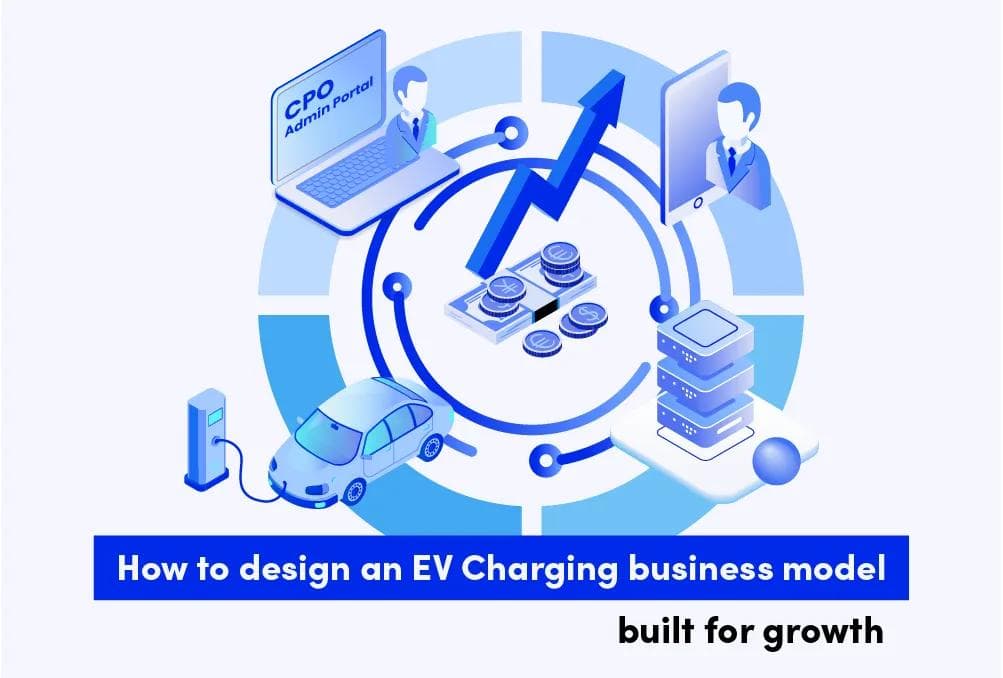
The conclusion first: the EV charging business model explained in its working form is built on one clean insight — charging is not infrastructure that has to be paid for, it is a transaction layer that pays out every time a user plugs in. For Distribution Partners — apps, fintechs, wallets, fleets, OEMs, insurers, super-apps — this means a recurring revenue line earned on activity their users already perform, with no operational footprint required after deployment. For Charge Point Operators, it means a new distribution channel, integrated alongside existing operations, that brings demand and settles cleanly at the public price. NetworkCore is the platform that operates this model. It is, structurally, the best roaming model available in the market — and the rest of this post explains exactly why.
The shift from cost centre to transaction business
The way the EV charging business model explained itself for the first decade of the industry was framed almost entirely as an infrastructure question. How many chargers should be built. How fast they should be. How they should be maintained. How utilisation should be modelled. How long the payback should be. The frame was useful for CPOs evaluating physical deployment decisions and almost completely useless for everyone else in the value chain — which has always been the much larger group.
The shift that has happened over the past two to three years is the recognition that EV charging business model explained correctly is a transaction business. Every charging session is a discrete commercial event with a payer, a recipient, a price, and a defined financial flow that has to settle correctly to multiple parties. The volume of these transactions is now enormous and compounding. The economics that matter, for most participants, are not the economics of any individual piece of infrastructure. They are the economics of the transaction layer running across all infrastructure simultaneously.
This reframe matters because it changes who has a role in the business model. In the infrastructure frame, the only participants who could meaningfully profit from charging were the ones who built chargers. In the transaction frame, every participant who plays a role in making a session happen — the CPO that delivers the energy, the Distribution Partner that routed the driver to the station, the platform that handles the financial flow — has a structurally aligned commercial position. Each earns from the activity. None earns from the others' loss. The model holds together because the underlying logic is additive, not extractive.
This is the working version of EV charging business model explained that has emerged as the market has matured. NetworkCore is the platform that operates it.
What this means for Distribution Partners
For any digital platform with EV-driving users — fleets, OEMs, fintechs, wallets, super-apps, mobility platforms, insurers, corporate benefits programmes, BNPL providers, fuel card operators, car rental platforms, and every other category of business in the same structural position — the EV charging business model explained through NetworkCore translates into a specific commercial picture.
Every charging session that the Distribution Partner's users complete through the integration generates a defined revenue share for the Distribution Partner, settled automatically on a short cycle, against activity that was going to happen regardless. The platform monetises the EV-driving segment of its user base by offering them convenience — consolidated access to every public charging network, in their existing app, at the transparent public price, without forcing the user to manage a separate charging app or account. The user gets a materially better experience. The platform earns on each session. Both outcomes are produced by the same integration.
The operational footprint is zero. There is no reconciliation work. There is no bilateral CPO management. There is no multi-jurisdiction compliance team being staffed. There is no charging operations function being run. The platform's existing engineering, finance, and operations teams continue working on the platform's core product. The charging revenue layer arrives without absorbing internal capacity.
This is what it means for the Distribution Partner that the EV charging business model explained by NetworkCore is genuinely transactional rather than infrastructure-based. The Distribution Partner is not earning by building or operating a charging product. It is earning by being inside the financial flow of charging sessions that its users were always going to perform. The architecture is properly aligned — convenience for the user, revenue for the platform, no operational overhead, no balance-sheet exposure, no compliance burden. The framing that makes this work is laid out in more detail in EV Charging Revenue Model, and the deeper case for the transaction-layer approach is set out in Earn Money from EV Charging.
The integration paths are flexible. Distribution Partners with strong UX preferences can build their own charging interface inside their existing product through the NetworkCore API. Platforms that want to ship faster can use NetworkCore's drop-in iframe — a complete brand-customisable charging interface that handles the entire user experience out of the box. The financial flow can stay inside the platform's existing PSP and ecosystem or run autonomously on NetworkCore's infrastructure. The Distribution Partner picks the configuration that fits its operational reality.
What this means for CPOs
The same EV charging business model explained delivers a structurally different but equally valuable position for Charge Point Operators.
A CPO joining NetworkCore gains a single new distribution channel that produces demand from a growing network of Distribution Partners — fleets, OEMs, fintechs, wallets, insurers, super-apps — without the CPO having to negotiate with each of them individually. The integration runs alongside whatever CSMS the CPO already uses, via standard OCPI, as one additional channel rather than a replacement for any existing roaming relationships. Everything the CPO has built continues to work exactly as it did before. The platform sits beside the CPO's existing operations and routes additional demand to its stations.
The commercial mechanics are clean. Sessions routed through NetworkCore settle within 48 hours, in the CPO's local currency, at the CPO's transparent published tariff. There is no markup inserted between the CPO's price and the driver's invoice. The CPO retains complete pricing sovereignty. The 30 to 60-day settlement cycles of traditional roaming arrangements are eliminated.
There is no subscription fee. The platform earns a small per-session commission only when sessions actually flow through it. If the network does not bring demand, the CPO pays nothing. The commercial alignment is structurally the right way around: the platform earns when the CPO earns, and not before. Think of NetworkCore the way any infrastructure business thinks about a serious distribution channel — a marginal cost of acquiring a session, proportional to the value of the session, with no fixed overhead absorbed by the asset operator.
Where the CPO has strategic volume with a specific Distribution Partner — a fleet operator with significant traffic in the CPO's geography, an OEM whose drivers concentrate on the CPO's corridors — optional bilateral commercial arrangements can be configured on top of the public pricing baseline. The public tariff remains the baseline visible to every other driver. The negotiated rate applies transparently to the agreed sessions between the agreed parties. Pricing transparency is preserved. Bilateral economics layer in for the specific relationships that justify them.
This is why NetworkCore is, structurally, the best roaming model available to CPOs. Traditional roaming hubs charge annual fees for membership regardless of whether sessions flow. They mediate the relationship between CPOs and eMSPs through opaque commercial layers. They settle on slow cycles. They do not align their commercial interests with the CPO's utilisation. NetworkCore reverses every one of these structural problems — no subscription, transparent commercial mechanics, settlement on a short cycle, alignment with sessions actually happening. It is the distribution channel CPOs have always wanted and rarely had.
Why both sides benefit — and the model holds together
The reason the EV charging business model explained by NetworkCore works at the platform level is that the commercial mechanics produce wins for both sides of the transaction simultaneously, with no party extracting value at another's expense.
The Distribution Partner monetises a user base it already has, through a transaction layer that does not distort its core product, with no operational footprint, earning a defined share of the value flowing through its integration.
The CPO gains demand it would not otherwise have reached, settled cleanly at its own public tariff, with the operational complexity of multi-Distribution-Partner relationships absorbed by the platform.
The driver charges through their preferred app or interface, at the transparent public price, with the consolidated experience that single-network products cannot match.
The platform earns a small per-session commission — proportional to the value flowing through the network, transparent in mechanics, payable only when sessions actually happen.
Every participant's incentive aligns with every other participant's success. CPOs benefit when Distribution Partners grow. Distribution Partners benefit when CPOs expand. Drivers benefit when both sides scale because the network they can charge through gets denser and more useful. The platform benefits when transaction volume grows, which it does when every other participant in the model is succeeding.
This is what a structurally clean EV charging business model explained at the platform level actually looks like in practice. It is the model that companies looking at this category — on either side of the transaction — should evaluate against the alternatives currently being offered to them by adjacent platforms that did not start with this framing.
The position to take
If your platform is a Distribution Partner with EV-driving users, the EV charging business model explained by NetworkCore is the cleanest commercial position currently available in mobility to monetise that user base through a transactional layer that requires no infrastructure, no operational team, and no compliance footprint.
If your business is a CPO operating physical charging infrastructure, NetworkCore is the best roaming model in the market — additional demand routed to your stations through a single integration alongside your existing operations, with no subscription fee, settlement within 48 hours, public price preserved, and the platform earning only when you earn.
Reach the team at networkcore.org to discuss what the EV charging business model explained by NetworkCore would look like for your specific position in the market.