Marketplace Revenue Models: How Digital Platforms Make Money — and What That Means for EV Charging
The most durable marketplace revenue models are not the ones that extract the most from a single transaction. They are the ones that build enough depth across multiple monetisation layers that the platform becomes genuinely indispensable to both sides of every deal.

The conclusion first: the most durable marketplace revenue models are not the ones that extract the most from a single transaction. They are the ones that build enough depth across multiple monetisation layers that the platform becomes genuinely indispensable to both sides of every deal. For marketplaces operating in emerging markets — where user trust, infrastructure maturity, and payment behaviour all differ from the established playbook — this layering is not just a growth strategy. It is a survival one. And within that layered architecture, EV charging is beginning to emerge as one of the most underappreciated recurring revenue streams available.
What a Marketplace Actually Is — and Why That Matters for Monetisation
A marketplace is not a retailer. It does not own the inventory it sells, the services it facilitates, or the relationships it hosts. It is an intermediary — and the commercial logic of being an intermediary is entirely different from the commercial logic of being a direct seller.
This distinction is fundamental to understanding marketplace revenue models because it defines where the platform's leverage actually lies. A retailer monetises by marking up goods. A marketplace monetises by making itself so useful to the transaction — reducing search cost, establishing trust, managing payment, providing data — that both the buyer and the seller are willing to pay for access to the interaction it enables.
That leverage is why the best marketplace businesses are so durable. Once a platform has genuine network effects, every incremental participant on one side increases the value of the platform for everyone on the other. The marketplace does not need to do more work to earn more revenue. It simply needs to be where the market happens.
The Core Marketplace Revenue Models
Most marketplace monetisation strategies combine two or three of the following mechanisms. The mix varies by market, vertical, and maturity — but the underlying logic of each is consistent.
Commission on transactions is the most common and most natural starting point. The marketplace takes a percentage of each transaction that flows through it — typically somewhere between 5% and 30% depending on the category, the competitive landscape, and how much operational work the platform is doing around the transaction itself. Commission models align the platform's incentives with its users: the marketplace earns more when its sellers sell more, which creates a structural reason to continue improving the product. The challenge is liquidity — a commission model only works if there are enough transactions happening to justify operating the platform. It is, in practice, a bet on volume.
Subscription or listing fees trade the uncertainty of transaction-linked revenue for predictability. Sellers pay a fixed recurring amount for access to the platform, regardless of how much they sell. This works well when the platform provides genuine workflow value beyond transaction facilitation — analytics, inventory tools, lead management, communications infrastructure. It is also more appropriate for higher-value categories where a small number of large transactions would otherwise generate disproportionately high commissions. The risk is that subscription fees create friction at the point of acquisition, which can slow early-stage platform growth.
Freemium addresses that acquisition friction directly. The platform is free to join and free to use at a baseline level, with premium features — better visibility, advanced analytics, API access, priority support — available for a fee. This is the dominant model for developer-facing or B2B platforms where the buyer needs to experience value before they are willing to pay for it. It is also increasingly common in emerging markets, where the ability to start for free reduces the trust barrier that might otherwise prevent first-time platform users from engaging at all.
Advertising and featured placement become viable once a platform has reached sufficient traffic. Sellers pay for prominence — a higher position in search results, a featured slot on a category page, a sponsored listing in a recommendations feed. This model has the highest margin of any marketplace revenue mechanism, but it depends entirely on the platform having organic demand that makes visibility genuinely valuable. Marketplaces that sell placement before they have earned user intent are, in effect, charging sellers for the platform's own immaturity.
Value-added services are where the most ambitious marketplace revenue models now point. Payments, financing, logistics, insurance, compliance tooling, data access — services that are adjacent to the core transaction and that the platform is uniquely positioned to provide because it already sits in the flow of money and information. These services tend to have higher margins than commission, are stickier than subscription, and are harder for competitors to replicate because they are built on proprietary transaction data.
Emerging Markets: Why the Standard Playbook Does Not Quite Fit
Marketplaces in emerging markets face a different starting position than their counterparts in Europe or North America. The infrastructure assumptions that underlie the standard monetisation playbook — reliable banking rails, widespread card penetration, high baseline consumer trust in digital platforms — do not hold consistently across Latin America, sub-Saharan Africa, Southeast Asia, or the Middle East.
This changes the sequence in which marketplace revenue models become viable, and it creates genuine opportunities for platforms that understand how to build for the local context.
In markets where a significant portion of the population is unbanked or underbanked, the payment layer is not a commodity. Mobile money infrastructure — M-Pesa in East Africa, PIX in Brazil, UPI in India — has created settlement rails that are in some cases more functional than traditional card networks for high-frequency, low-value transactions. Marketplaces that integrate these rails natively, rather than defaulting to card-only checkout, access far more of the market. They also capture a payment relationship that is, in itself, a monetisation asset.
Trust is slower to establish in emerging markets, which means the freemium model — get users in for free, convert them to paid over time — is often more important than it would be in a mature market. The commission model works better once the platform has a track record. Platforms that demand payment upfront from new users in markets where institutional trust in digital commerce is still developing will lose the onboarding battle.
On the other hand, the data value of being the first serious marketplace in a category in an emerging market can be exceptional. The platform that captures the first years of transaction history in a category has an informational advantage that is genuinely difficult to replicate — and that informational advantage underpins both the advertising model and the value-added services model once the platform reaches maturity.
Perhaps most importantly for Demand Partners specifically: emerging markets tend to have younger, faster-growing user bases with stronger mobile-first behaviour and lower switching inertia than established markets. This means that a platform which embeds the right additional services early — before user habits calcify — has a significantly larger opportunity to define what the full product looks like for that cohort. The cost of adding a new revenue layer to a mobile-first platform with an engaged, growing user base is lower than at any other point in that platform's lifecycle.
The Affiliate Revenue Layer: Recurring Income from Adjacent Services
The most underexploited layer in most marketplace revenue models is the affiliate or embedded-service layer — the ability to offer users access to a third-party service that is directly relevant to what they are already doing on the platform, and to earn a share of the revenue that service generates every time a user engages with it.
Affiliate revenue is structurally different from commission revenue in one important way: it is not contingent on the platform's core transaction. A commission model earns nothing when users are not transacting. An affiliate or embedded-service model can generate revenue on the same user base from an entirely separate activity — one that the platform enables but does not need to build itself.
The most sophisticated marketplace platforms are increasingly treating affiliate integrations not as a supplementary advertising format but as a genuine product extension. The platform sources an adjacent service, integrates it into the user experience, and earns a recurring share of the revenue that flows through it. For the user, it is a convenience. For the platform, it is a new income line with near-zero marginal cost.
The performance data on affiliate channels broadly supports this approach. Affiliate-driven customer acquisition consistently delivers lower cost and higher retention than paid acquisition through conventional advertising channels — a dynamic that is particularly relevant in emerging markets where customer acquisition costs are rising as competition among platforms intensifies.
EV Charging as a Recurring Revenue Layer for Marketplaces
This is where the EV charging business model becomes directly relevant to any marketplace thinking carefully about its monetisation architecture.
EV adoption in emerging markets — particularly in Latin America and Southeast Asia — is accelerating. The driver base is growing, the infrastructure is being built, and the demand for reliable, accessible charging is real and increasing. For marketplaces with mobile-first user bases that include a meaningful and growing number of EV drivers, charging is not a niche feature. It is a recurring utility need that happens multiple times a week, generates a predictable transaction, and builds habitual engagement with whatever platform facilitates it.
The commercial structure is straightforward. A marketplace integrates EV charging access as a service within its platform — drivers can locate chargers, initiate sessions, and pay through the app they already use. Every session generates a revenue share for the platform without the marketplace needing to own hardware, manage infrastructure, or handle the financial settlement itself. That settlement layer is handled by the financial network sitting beneath the integration.
For a Demand Partner — a marketplace, a fleet platform, a mobility app, or any other platform with an EV-driving user base — this looks structurally identical to any other well-designed affiliate integration: a relevant service, embedded natively, generating per-transaction revenue on every use. The difference is the frequency. EV drivers charge regularly. Unlike a travel booking or an insurance quote, charging is not an occasional purchase — it is a routine one. Recurring, predictable, scaling with the user base. That is precisely the revenue profile that marketplace operators building for long-term monetisation should be looking for.
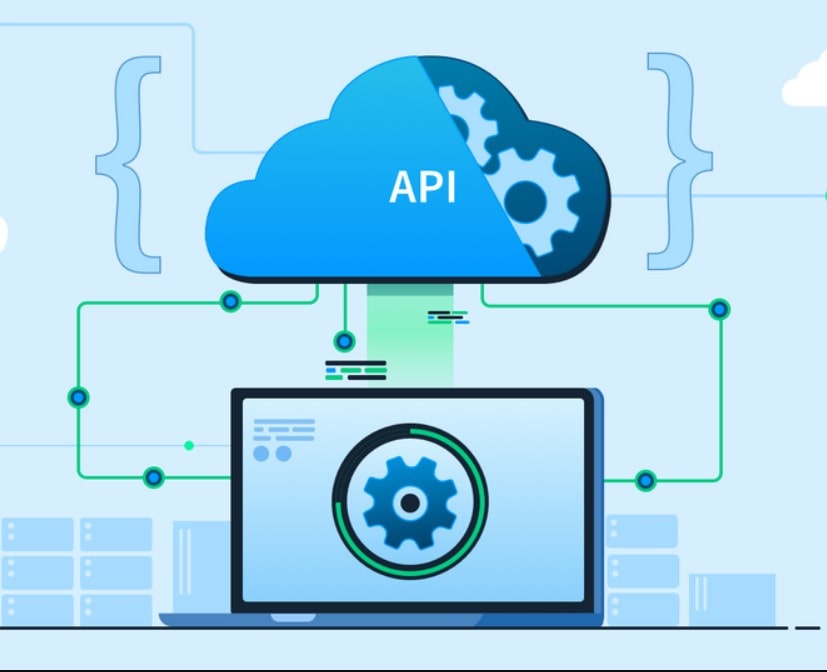
NetworkCore provides the infrastructure that makes this integration possible — a neutral routing, clearing, and settlement layer that connects Demand Partners with CPO networks through one API, without bilateral contracts, without settlement complexity, and without the need to build the financial plumbing from scratch. For marketplaces evaluating their marketplace revenue models, EV charging access is worth understanding not as a vertical bet but as a revenue layer — one that earns on the user base you already have, every time they drive.
Marketplace revenue models that endure are the ones built on layers — not single bets. EV charging is one of those layers. And NetworkCore is the infrastructure that makes it possible.