Plug and Charge Business Model: From Standard to Strategic Value
The Plug and Charge business model transforms EV charging from a manual billing and authentication process into a seamless, automated transaction platform — reducing friction for drivers and enabling new monetisation opportunities.
NetworkCore is a transaction infrastructure company building the financial clearing and settlement layer that sits between demand platforms and charging supply across fragmented EV charging ecosystems. Our expertise in protocols like OCPI, financial roaming, and session-level settlement makes us uniquely qualified to explain how the Plug and Charge business model is evolving from a technical convenience into a structural enabler of scalable EV charging markets.
The Plug and Charge business model transforms EV charging from a manual billing and authentication process into a seamless, automated transaction platform — reducing friction for drivers and enabling new monetisation opportunities, but only if combined with interoperable financial infrastructure.
The Genesis of Plug and Charge
Plug and Charge was conceived as part of the international standard ISO 15118, an EV-to-charger communication protocol developed to go beyond analogue control and integrate secure digital authentication and billing into the charging session itself. The idea is elegant: when the vehicle plugs in, it automatically identifies itself to the charger using digital certificates, authorises the session, and triggers payment — all without human intervention. This eliminates the need for apps, RFID cards, or manual payment steps that have long fragmented the user experience in public charging networks.
The original specification for ISO 15118 dates back to the early 2010s, and Plug and Charge emerged from that ecosystem of secure, bidirectional communication standards designed to make EV charging as simple as refuelling a regular vehicle. An open test system was launched in late 2021 to demonstrate interoperability across multiple vehicle and charger manufacturers.
Initially supported in select European markets, ISO 15118-based Plug and Charge became widespread partly due to regulatory requirements. Under the European Union's AFIR regulations, for example, public chargers deployed from 2026 onwards must support ISO 15118, and full Plug and Charge compliance becomes mandatory by 2027.
This shift — from optional convenience feature to regulatory expectation — signals that Plug and Charge is not merely an interface improvement but a business model shaping how sessions are monetised and experienced.
How Plug and Charge Works Today
At its core, Plug and Charge hinges on secure digital certificates. Vehicles and charging stations exchange encrypted credentials — typically managed via a Public Key Infrastructure (PKI) — that confirm identity and authorisation. Once recognised, the session begins automatically, and the backend platform handles billing.
Technically, three parties must support the protocol: the EV, the charging station, and the backend system that brokers the certificate validation and billing instructions. When all three are Plug and Charge-enabled, no separate payment apps, RFID cards, or manual steps are necessary. This dramatically simplifies the driver experience.
From a business model perspective, Plug and Charge removes barriers to adoption. It reduces friction and increases session frequency because drivers no longer need to manage multiple accounts across charging networks. That makes charging more like filling up at a gas station: insert and go. The simplicity drives utilisation and customer satisfaction — two fundamentals for monetisation.
The Strategic Divide Between Europe and the United States
Despite its promise, Plug and Charge has not evolved uniformly around the world. Today, Europe's regulatory regime is aggressively driving standardised adoption through AFIR and related mandates. This is accelerating deployment of ISO 15118-compliant stations and services across the continent.
In the United States, the picture is more complex. Multiple charging networks, OEM programs, and standards bodies are involved, and adoption of ISO 15118 is encouraged but not yet uniformly mandated. Some networks and automakers support Plug and Charge, yet there has been discussion about alternative approaches or enhancements. In late 2024, SAE International, automakers, and U.S. federal bodies announced efforts to create a more universal Plug and Charge-like protocol with stronger PKI frameworks designed to improve interoperability between vehicles and chargers from different ecosystems.
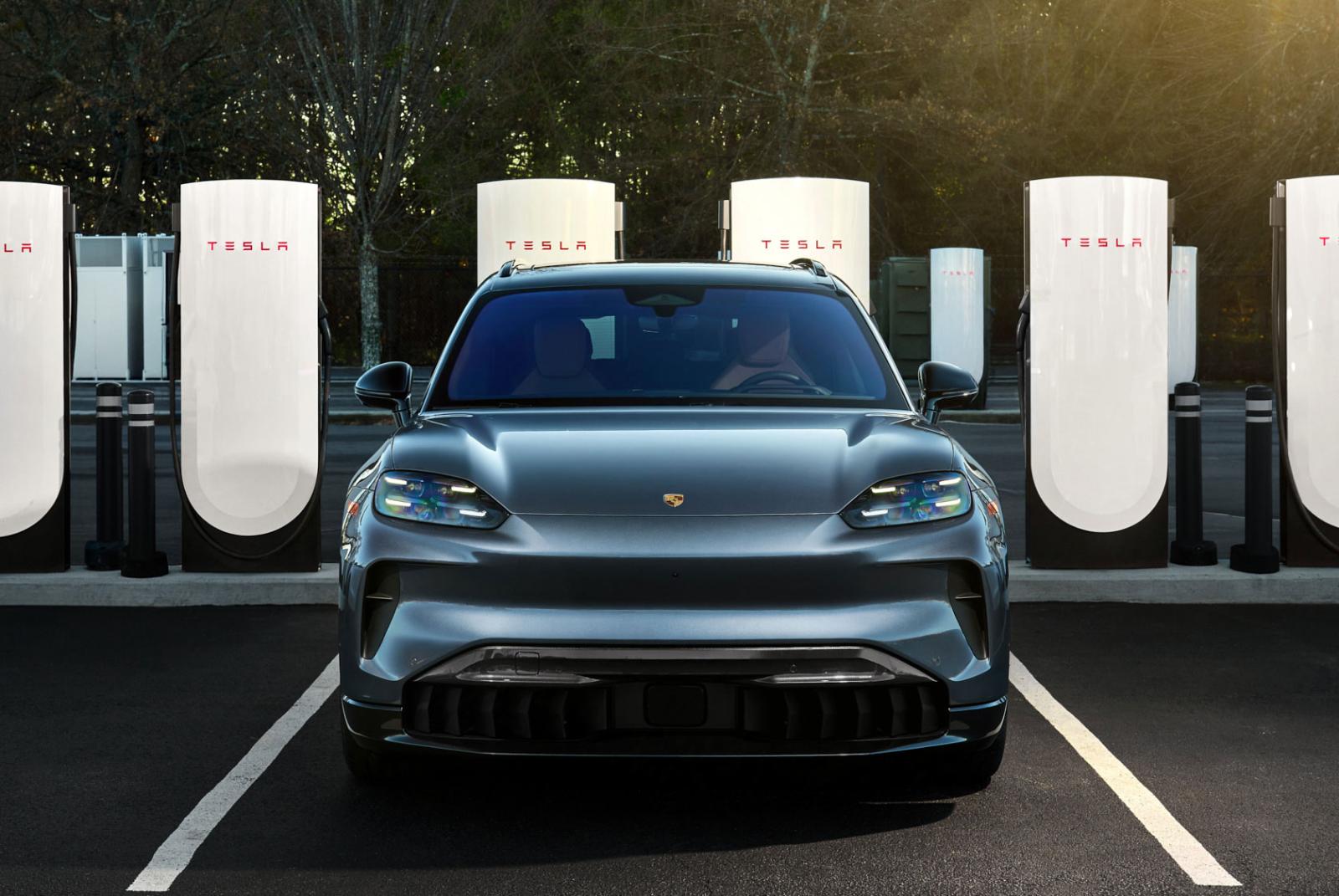
Compounding this landscape is Tesla's legacy position. Tesla deployed a form of Plug and Charge in its Supercharger network long before ISO 15118 was formalised, using proprietary protocols that were not initially compatible with the standard. While Tesla's North American Charging Standard (NACS) has become influential in the U.S., it also introduces friction in interoperability between CCS-based charging networks and Tesla-centric systems.
It remains uncertain how these standards will converge globally. However, the industry trend — supported by global testing initiatives such as interoperability demonstrations at consortium events — is toward harmonisation that allows multiple Plug and Charge approaches to coexist without driver complexity.
The Future of the Plug and Charge Business Model
Plug and Charge is widely considered the future of EV charging because it reflects a broader shift from manual, app-driven authentication toward automatic, certificate-based billing. It removes one of the most persistent user experience barriers in public charging, and it scales with mobility — especially when paired with roaming and pervasive coverage.
But technical convenience alone does not complete the picture.
The value of Plug and Charge grows exponentially when combined with coherent financial infrastructure. High utilisation drives monetisation, but monetisation requires predictable settlement, compliance, and transparent revenue splitting across CPOs, OEMs, and demand platforms.
This is where many early Plug and Charge business model rollouts encounter business model friction.
NetworkCore and Plug and Charge: Bridging Payments and Mobility
At NetworkCore, we support Plug and Charge alongside OCPI-based roaming and settlement infrastructure so that CPOs and demand partners can benefit from both technical simplicity and financial coherence.
Most Plug and Charge implementations focus on eliminating the need for cards or apps — improving driver experience but leaving backend settlement complexity intact. NetworkCore takes it a step further by treating each Plug and Charge session as an atomic financial transaction.
When a Plug and Charge session occurs through NetworkCore's platform, the driver's authenticated session triggers automated billing. NetworkCore captures the payment, applies public charging prices where relevant, handles currency conversion and VAT compliance, and settles funds predictably to all counterparties — CPOs, roaming partners, and demand platforms — in line with transparent rules.
This transforms Plug and Charge from a user convenience feature into a business model enabler that aligns incentives across the ecosystem, including in the context of roaming hubs like we discussed in EV roaming hub – Data roaming was step one. Combined with financial roaming, Plug and Charge becomes a driver for monetisation rather than just a UX enhancement.
Plug and Charge and the Broader EV Charging Knowledge Cluster
Understanding the Plug and Charge business model sits at the intersection of several key dynamics you will find across our content cluster:
- EV charging payment platform: Plug and Charge interacts with pricing and settlement logic in fundamental ways.
- EV roaming hub explained: Connectivity enabled by roaming protocols creates the network infrastructure that Plug and Charge needs to reach broader scale.
- How does EV charging money flow?: Plug and Charge impacts how sessions are authenticated and billed, but settlement coherence remains the critical missing layer.
- CSMS vs roaming vs settlement: Plug and Charge sits at the vehicle-to-charger layer, while settlement infrastructure standardises the economic layer.
Collectively, these pieces illustrate that driver experience and financial infrastructure must evolve hand in hand.
Final Conclusion
The Plug and Charge business model began as a technical proposal in the ISO 15118 standard to eliminate manual authentication and payment steps. It has matured into a global trend and, in some regions, a regulatory expectation. In doing so, it promises to eliminate a major friction point in public charging adoption.
However, realising its full business value requires more than certificate exchange and automated session initiation. It requires seamless integration with financial infrastructure that can reconcile billing, compliance, and settlement at scale.
NetworkCore's approach — supporting Plug and Charge with coherent payment capture, public price integrity, and predictable settlement — is what enables this transition.
Plug and Charge is the future of charging. But to make that future commercially viable for CPOs, OEMs, and demand platforms, we must pair it with financial infrastructure that treats charging sessions as first-class transaction events.
That is where the Plug and Charge business model earns its strategic value.