EV Charging for Connected Cars: Why OEMs Should Own Demand, Not Infrastructure
As vehicles become software-defined and connected, EV charging for connected cars sits at the intersection of customer experience, recurring revenue, and long-term brand loyalty. OEMs should focus on a demand-side strategy, not infrastructure ownership.
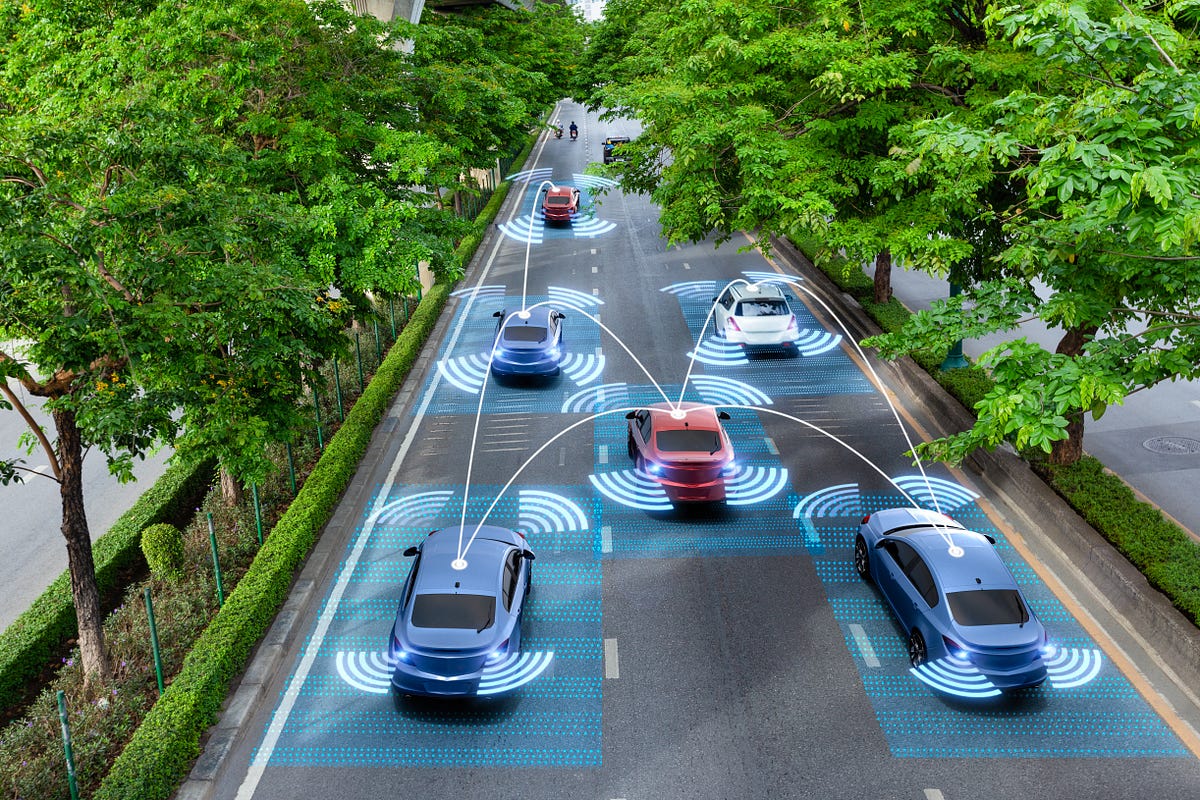
As vehicles become software-defined, connected, and continuously updated over the air, the competitive landscape for OEMs is changing rapidly. Hardware differentiation is narrowing. Battery performance is converging. Autonomous features are progressing in parallel.
In this environment, EV charging for connected cars is no longer a peripheral topic. It sits directly at the intersection of customer experience, recurring revenue, and long-term brand loyalty.
Yet many OEM strategies still approach charging as an infrastructure problem.
That is the wrong layer to compete on.
OEMs should not run charging networks.
They should run demand.
They should build trust with their customers/drivers.
The Strategic Shift: From Vehicles to Connected Ecosystems
Connected cars are not just vehicles with modems. They are platforms. They generate data, host services, manage subscriptions, and increasingly shape post-sale revenue.
When thinking about EV charging for connected cars, the question is not whether charging matters. It clearly does. The real question is where OEMs should position themselves in the value chain.
Historically, some OEMs attempted to:
- Invest in proprietary charging networks
- Form exclusive charging alliances
- Lock drivers into specific infrastructure
While these moves aimed to control the experience, they introduced capital intensity, operational complexity, and geographic rigidity.
Charging infrastructure scales locally.
Connected car demand scales globally.
The more connected the vehicle becomes, the less sense it makes to anchor strategy in fixed assets or specific partner assets.
EV Charging for Connected Cars Is a Demand-Side Challenge
From the driver's perspective, charging should feel seamless. The car should:
- Discover available chargers
- Display transparent pricing (the same they will see and pay at the station)
- Authenticate automatically (Plug & Charge or OCPI)
- Settle payment invisibly
- Record transactions clearly
All of this happens inside the connected ecosystem.
But behind the scenes, charging involves:
- Multiple charge point operators (CPOs)
- Roaming agreements
- OCPI-based data exchange
- Plug & Charge certificate handling
- Payment collection
- Revenue settlement
- Cross-border VAT and FX
For OEMs, the opportunity lies not in building this infrastructure, but in orchestrating demand across it.
That is the true meaning of EV charging for connected cars in a connected era.
Plug & Charge Is Not the Business Model
Plug & Charge (ISO 15118) is often presented as the future of charging. And from a user experience standpoint, it is a major step forward. The vehicle authenticates automatically, and the driver simply plugs in.
However, Plug & Charge solves authentication — not economics.
An OEM may enable Plug & Charge, but still face:
- Fragmented roaming
- Slow settlement
- Opaque pricing
- Misaligned incentives between CPOs and demand platforms
Without a financial and roaming backbone, Plug & Charge remains a UX improvement layered on top of structural complexity.
This is where EV charging for connected cars needs to evolve — beyond authentication and toward economic alignment.
Why OEMs Should Focus on Demand, Not Infrastructure
OEMs already control what matters most:
- The in-car interface
- The customer relationship
- The connected vehicle data
- The software stack
- The post-sale digital ecosystem
These assets create leverage. Charging infrastructure does not.
Running charging networks requires:
- Capital expenditure
- Local regulatory engagement
- Site acquisition
- Grid coordination
- Maintenance operations
None of these activities strengthen the OEM's core competitive advantage.
In contrast, orchestrating demand allows OEMs to:
- Embed charging into the vehicle UI
- Keep drivers inside the OEM ecosystem
- Generate recurring transaction revenue
- Enhance loyalty across borders
This is why EV charging for connected cars should be treated as a service layer, not an infrastructure strategy — a principle central to Mobility as a Service.
The Payments Layer Is the Real Control Point
As mobility converges with finance, payments + mobility becomes a central theme. Every charging session is a transaction. That transaction carries value.
If OEMs embed charging through the right model, they can:
- Earn a percentage of charging sessions
- Offer charging at public prices to preserve trust
- Provide unified billing inside the OEM account
- Deliver transparent cost tracking
If they attempt to run networks directly, they inherit operational risk without gaining strategic control.
The control point is not the charger.
It is the transaction.
EV Charging for Connected Cars at Global Scale
Connected cars do not respect borders. Drivers travel. Fleets cross countries. Business users operate internationally.
Infrastructure, however, remains fragmented.
A scalable EV charging for connected cars strategy must:
- Support many-to-many roaming
- Integrate with OCPI networks
- Work across CPOs
- Handle FX and VAT
- Enable transparent settlement
- Avoid per-market reinvention
This requires a roaming and clearing layer purpose-built for cross-border operations.
Where NetworkCore Fits
NetworkCore was built specifically to address this demand–supply flow challenge.
It acts as:
- A pricing layer
- A roaming hub
- A clearing layer
- A settlement platform
Connecting:
- Demand from OEM ecosystems
- Supply from public charging networks
Through a single integration, OEMs can embed EV charging into connected vehicles without owning infrastructure. NetworkCore handles:
- Session pricing and reservation
- Session routing
- Payment collection
- Revenue splitting
- Invoicing, FX and VAT handling
- Settlement transparency
Importantly, NetworkCore operates on public charging prices, preserving driver trust and brand alignment.
OEMs focus on:
- User experience
- In-car integration
- Connected services
- Demand growth
NetworkCore handles the complexity underneath.
From Charging Networks to Charging Ecosystems
The next phase of electrification will not be defined by who owns the most chargers. It will be defined by who orchestrates the best ecosystem.
EV charging for connected cars is about:
- Seamless integration
- Transparent pricing
- Embedded transactions
- Global access
- Trust
OEMs are uniquely positioned to lead this — if they focus on demand, not infrastructure.
A Smarter Path Forward
OEMs that attempt to vertically integrate into charging networks risk diluting focus and capital.
OEMs that embed charging as a service — through EV charging as a service — can:
- Build trust with drivers via public charging prices
- Expand recurring revenue, with no opex cost
- Strengthen loyalty
- Improve connected vehicle value
- Scale internationally
- Remain asset-light
This is not a compromise. It is a strategic optimisation.
Final Thought
The future of EV charging for connected cars is not about owning chargers. It is about owning the relationship between driver, vehicle, and transaction.
OEMs should not run charging networks.
They should run demand.
With the right roaming and settlement partner, EV charging becomes a high-frequency, embedded service inside the connected car — globally scalable, economically aligned, and strategically sound.
NetworkCore exists to enable exactly that.