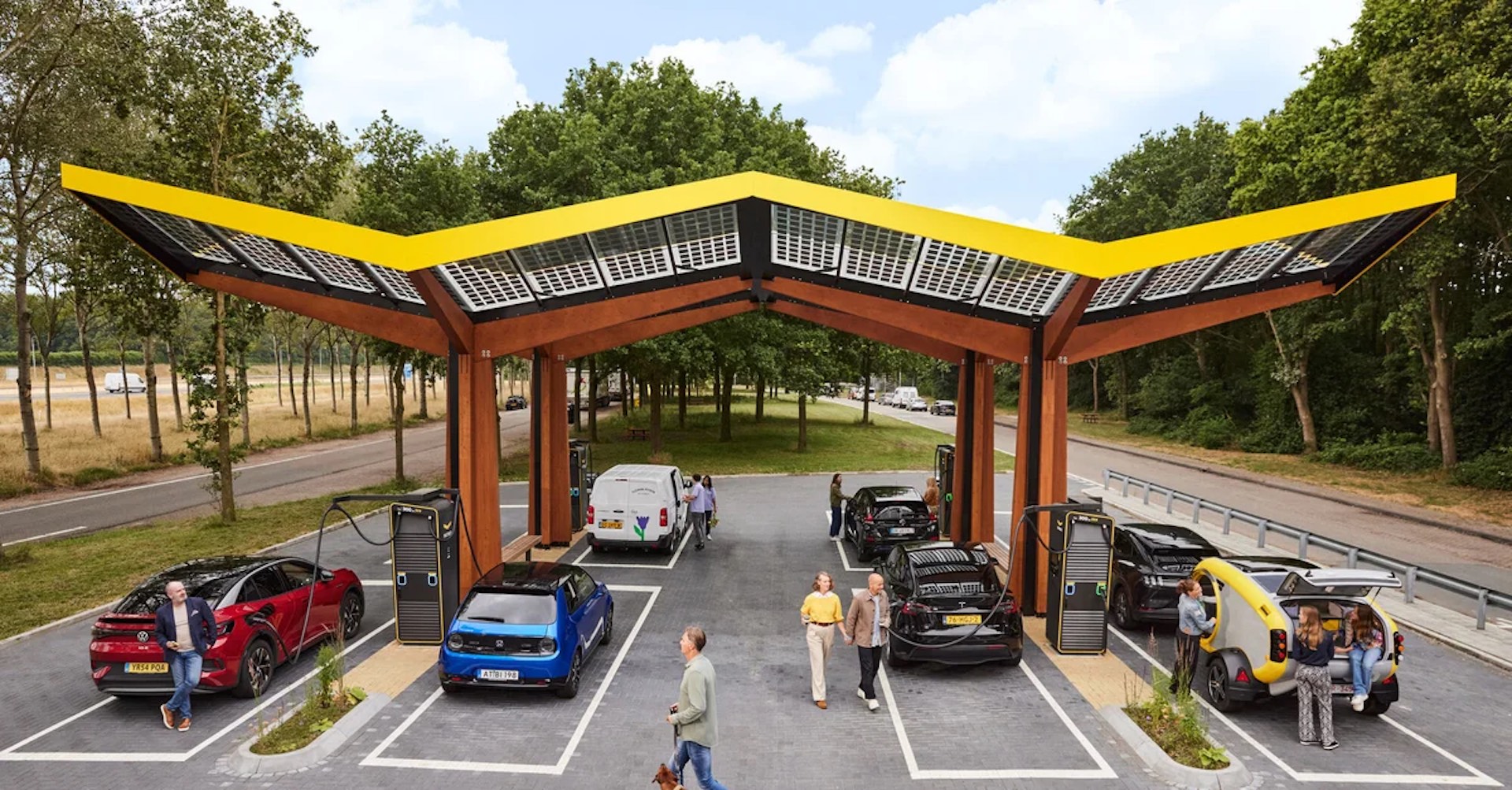
EV Charging for Corporate Fleets: Why Fleets Don't Need Chargers Everywhere — They Need Charging Access And Effective Pricing
The real challenge with EV charging for corporate fleets is not the lack of chargers. It's the lack of accessible, affordable, and interoperable charging across locations, networks, and borders.

As corporate fleets electrify, one assumption continues to slow progress: that scaling EV fleets requires building charging infrastructure everywhere vehicles might go. It doesn't.
The real challenge with EV charging for corporate fleets is not the lack of chargers. It's the lack of accessible, affordable, and interoperable charging across locations, networks, and borders.
For fleets and for the platforms that serve them; the winning strategy is not infrastructure ownership. It is access, coverage, and cost control.
Why EV Charging for Corporate Fleets Is a Different Problem
Corporate fleets behave very differently from private EV drivers.
Fleet vehicles:
- Drive more frequently
- Operate on schedules, not habits
- Cross cities, regions, and borders
- Are managed by cost, not convenience
This makes EV charging for corporate fleets a systems problem, not a hardware problem.
A fleet with 1,000 vehicles does not need 1,000 chargers. It needs reliable charging wherever those vehicles already operate — depots, city parking, highways, customer locations, and overnight stops.
The False Promise of "Build More Chargers"
Many EV charging strategies for fleets start with infrastructure rollouts:
- Install chargers at depots
- Add chargers at offices
- Negotiate private charging contracts
This works up to a point.
As fleets scale, infrastructure-only strategies break down:
- Vehicles leave depots
- Routes change
- Cross-border travel increases
- Utilisation becomes uneven
- Capital costs rise
The result is stranded assets in some places and charging gaps in others. This is why EV charging for corporate fleets cannot be solved by infrastructure alone.
Fleets Don't Need Chargers Everywhere. They Need Charging Everywhere.
This distinction matters.
Chargers everywhere means:
- Capital expenditure
- Long deployment timelines
- Maintenance overhead
- Geographic rigidity
Charging everywhere means:
- Access to many existing networks
- Roaming across operators
- Seamless payment and settlement
- Predictable, low-cost pricing
For corporate fleets, the second option is almost always superior.
The Cost Problem: Why Cheap Charging Matters More Than Fast Charging
For fleets, charging speed might be secondary, as charging cost is mostly primary.
Electric fleets live or die by:
- Cost per kilometer
- Predictable energy pricing
- Transparent invoicing
- Fast settlement and reconciliation
Many fleet operators discover that public charging — especially cross-border — introduces:
- Markups
- Opaque roaming fees
- FX surprises
- Delayed invoicing
Solving EV charging for corporate fleets means solving the economics, not just the access.
Why EV Charging for Corporate Fleets Is a Demand Problem
Fleet demand already exists. Vehicles are on the road every day.
What's missing is a system that:
- Aggregates that demand
- Routes it to the cheapest available supply
- Handles settlement cleanly
- Works across networks and borders
This is where demand platforms, like NetworkCore and the infrastructure beneath them become critical.
Who Actually Needs to Care About EV Charging for Corporate Fleets
EV charging for corporate fleets is not only a fleet manager's problem.
It directly concerns:
- OEMs offering fleet and in-car services
- Fintechs and wallets managing fleet payments
- Car rental companies electrifying their vehicles
- Insurance companies bundling EV services
- Mobility and charging apps serving fleet drivers
- Platforms coordinating logistics or delivery
All of these players touch fleet demand but none want or should own charging infrastructure.
Why Traditional Fleet Charging Models Don't Scale
Most fleet charging solutions rely on:
- Closed networks
- Proprietary cards
- Country-specific agreements
- Manual reconciliation
These approaches struggle when fleets:
- Operate internationally
- Use multiple vehicle types
- Expand rapidly
- Need real-time cost visibility
As a result, EV charging for corporate fleets often becomes fragmented, expensive, and operationally heavy.
NetworkCore's Approach to EV Charging for Corporate Fleets
NetworkCore approaches EV charging for corporate fleets from a different angle: demand first. Instead of asking fleets to build infrastructure, NetworkCore:
- Connects fleet demand to existing charging supply
- Works across public, private, and fast-charging networks
- Operates as a roaming, clearing, and settlement layer
- Handles money, FX, VAT, and revenue sharing
Fleets and the platforms that serve them integrate once and gain access to charging everywhere vehicles go. Best of all, they get to work with transparent and predictable public charging prices.
Cheaper Charging Through Market Access
By aggregating demand and routing it across multiple networks, NetworkCore enables:
- Better pricing transparency
- Reduced roaming markups
- Faster settlement
- Lower operational overhead
This directly addresses the core requirement of EV charging for corporate fleets: cheap, predictable charging at scale.
No Infrastructure, No Lock-In, No Fixed Costs
A key advantage for fleets and demand platforms is the business model of NetworkCore, as it operates on commission only:
- No upfront fees
- No fixed subscriptions
- No ongoing minimums
- No fees per user
Fleets pay only when charging happens and not before. Platforms earn when they generate charging demand. Everyone's incentives are aligned.
This model makes EV charging for corporate fleets economically viable as fleets grow and evolve.
Why Cross-Border Fleet Charging Is the Real Test
The hardest version of EV charging for corporate fleets is cross-border.
Different networks. Different currencies. Different VAT rules. Different settlement rails.
NetworkCore is designed specifically for this reality. By centralising clearing and settlement, it turns cross-border charging from a bespoke project into a repeatable capability.
The Future of EV Charging for Corporate Fleets
As fleets electrify globally, the winners will not be those who build the most chargers.
They will be the ones who:
- Enable access everywhere
- Keep charging costs low
- Remove operational friction
- Monetise demand intelligently
EV charging for corporate fleets is not an infrastructure race. It is a market design problem.
Final Thought
Corporate fleets don't need chargers everywhere. They need charging everywhere, and they need it as inexpensive as possible.
That requires a platform that connects demand to supply, handles the economics, and scales across borders.
That is exactly what NetworkCore is built to do.