In-Car EV Charging: OEMs Shouldn't Run Charging Networks. They Should Run Demand.
OEMs have spent the last decade trying to own the in-car EV charging experience end-to-end. It hasn't worked. The right role for an OEM is not operator — it's demand partner.

The short version: OEMs have spent the last decade trying to own the in-car EV charging experience end-to-end — the network, the contract, the billing. It hasn't worked. Drivers are frustrated, CPOs are under-monetised, and automotive brands are burning capital on infrastructure that has nothing to do with building great cars. There is a better architecture. NetworkCore is it. This post explains why the old model is broken, why the subscription-based roaming model doesn't scale as EV volumes double and triple, and why the right role for an OEM in in-car EV charging is not operator — it's demand partner.
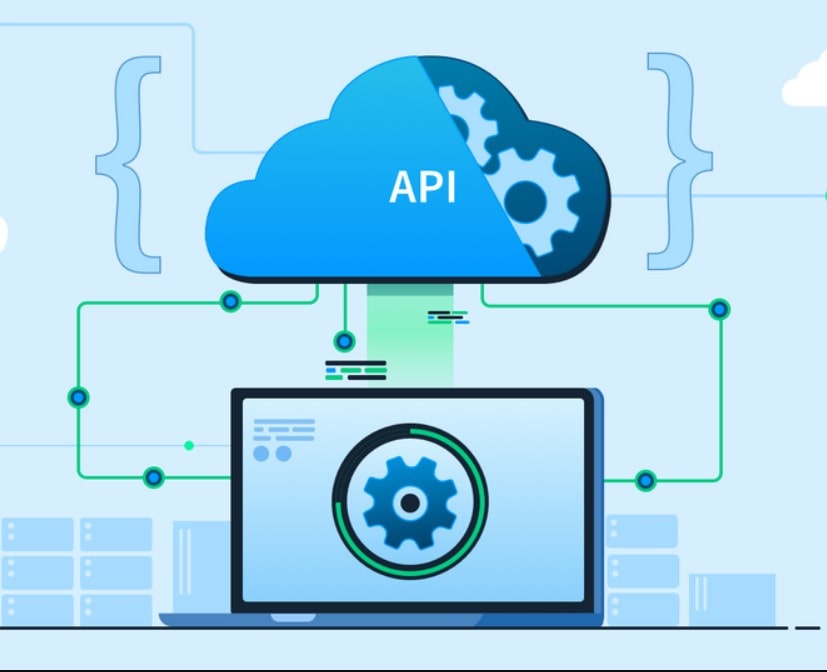
NetworkCore AG is the financial infrastructure layer for global EV charging — providing real-time clearing, settlement, FX conversion, and automated VAT invoicing through a single API for charge point operators and demand partners worldwide.
Where It All Started: The Early Promise of OEM-Controlled Charging
When the first wave of mass-market EVs launched in the early 2010s, automakers faced a genuine problem. Public charging infrastructure was sparse, inconsistent, and deeply fragmented. For a brand selling the idea that an electric vehicle could replace a combustion car, the charging experience was an existential brand risk. If a driver plugged in and nothing worked, the car looked broken. So OEMs did what large organisations do when they encounter a broken market: they tried to control it.
Proprietary charging networks emerged. Bilateral deals were struck with charge point operators. Subscription products were built into vehicle purchase packages — a fixed monthly fee that entitled the driver to charging at preferential rates across a curated network of stations. The logic seemed sound. Control the experience, protect the brand, capture the recurring revenue.
For a market of tens of thousands of EVs, this was manageable. It was expensive, operationally complex, and technically brittle — but manageable. The cracks only became visible when the market started to scale.
The Hubject Era: Roaming Hubs and the Subscription Trap
As EV adoption accelerated through the late 2010s, the industry converged on a different model: roaming hubs. Hubject, the joint venture founded by BMW Group, Bosch, Daimler, EnBW, E.ON, Siemens, and Volkswagen Group, became the dominant interoperability layer in Europe. The idea was elegant — a neutral hub through which CPOs and mobility service providers could exchange session data, authenticate drivers, and enable cross-network roaming without bilateral integrations.
Hubject solved the technical fragmentation problem, or at least reduced it. But it left the financial plumbing untouched. And it embedded a pricing model that made sense for a 2015 EV market but is quietly becoming a structural problem for 2025 and beyond.
The model works roughly like this: OEMs and mobility service providers purchase access to the roaming network through subscription arrangements. Variable fees are layered on top. CPOs connect to gain distribution. Drivers get access through their OEM app or card. On the surface, this looks like a functioning ecosystem.
The problem is the subscription itself. OEM charging subscriptions — typically priced between €10 and €30 per month depending on the brand and tier — embed a cost that the OEM must either absorb or pass through to the driver. When a driver with a monthly subscription arrives at a public charger displaying €0.35/kWh, but is billed at the higher subscription-implied rate of €0.55 or €0.60/kWh, something has gone wrong. The displayed price and the applied price are disconnected. The driver doesn't understand why they're paying more. The CPO didn't set that rate. The OEM's roaming agreement did.
This is not a minor UX complaint. It is a structural trust problem. And it gets worse as in-car EV charging scales.
Why the Subscription Model Doesn't Scale With EV Adoption
Here is the arithmetic that breaks the existing model.
In 2023, global BEV volumes were approximately 40 million vehicles. By 2025, that number had grown to 75 million — an 87% increase in two years, sustained at roughly 36-37% year-on-year growth. North America, Europe, and Asia are all on similar trajectories. The ICE fleet is declining. The EV fleet is not.
For every new EV that enters the market, a driver enters the public charging ecosystem. For OEMs managing charging through subscription products and bilateral roaming agreements, each new vehicle is an incremental operational burden. New subscription accounts to manage. New billing relationships. New VAT complexity across jurisdictions. New support overhead when the in-car EV charging experience breaks down because a roaming token isn't recognised or a tariff has changed.
The bilateral and subscription model was designed for a market of early adopters. It is not designed for a mass-market fleet. The operational complexity scales with vehicle volume. The revenue does not scale proportionally. The margins compress. The brand risk doesn't go away — it compounds.
There is also the competitive problem. As EV volumes grow, drivers become more sophisticated. They comparison-shop on charging price. They notice when the rate applied through their OEM app differs from the public price displayed at the charger. They notice when a competitor's vehicle charges at the public price while theirs does not. The opacity that the subscription model was built on is becoming a liability.
The in-car EV charging market needs a different architecture. One where the price shown is the price charged. One where the OEM's role is to drive demand, not to manage financial flows.
NetworkCore: The Financial Infrastructure Layer for In-Car EV Charging
NetworkCore was built on a specific insight: the EV charging industry had solved (or was solving) the technical interoperability problem through OCPI and ISO-15118 Plug & Charge. What it had not solved was the financial layer. How money moves from driver to CPO, across currencies, across jurisdictions, through revenue-sharing arrangements, with automated VAT, at settlement speeds that actually work for CPO cash flow.
That is what NetworkCore does. It is the clearing, settlement, and financial infrastructure layer for in-car EV charging — operating between the driver's payment, the CPO's charging asset, and every intermediary in between.
The model is straightforward. NetworkCore acts as disclosed agent and payment collector on behalf of CPOs, who remain the merchant of record. When a driver initiates a charging session through a demand partner — an OEM app, a fleet management platform, a superapp, a mobility wallet — the transaction flows through NetworkCore's infrastructure. Funds are collected into safeguarded EMI accounts. The clearing ledger allocates revenue in real time. Settlement is executed at T+2 for CPOs, with daily or weekly payouts to demand partners. FX conversion is handled at settlement. VAT invoicing is automated per jurisdiction.
The commission model is 90% to the CPO, 5% to the demand partner, 5% to NetworkCore. There are no subscriptions. There are no bilateral negotiation fees. There are no variable roaming charges layered on top of public price. The price the driver sees at the charger is the price the driver pays. That is not a minor feature. That is the architecture.
Why This Is the Right Model for OEMs Specifically
An OEM's competitive advantage is not in clearing and settlement. It is not in FX routing or VAT compliance across 30 jurisdictions. It is not in managing rolling chargeback reserves or reconciling PSP settlement reports against EMI safeguarding balances. These are infrastructure problems. They are not automotive problems.
What an OEM does have is distribution. Millions of connected vehicles. Millions of active app users. A trusted brand relationship with drivers who want a seamless in-car EV charging experience. The ability to surface charging options, route drivers intelligently, and provide a premium experience from the dashboard.
In the NetworkCore model, that is precisely what a demand partner does. An OEM integrates once through NetworkCore's single API. Their drivers gain access to the full network of connected CPOs at public prices. Every session generates a 5% commission back to the OEM, automatically, without billing negotiation or operational overhead. The OEM's role is to drive charging demand through their platform. NetworkCore handles everything that happens from payment to payout.
This is not a diminished role for the OEM. It is a clarified one. The OEM focuses on the in-car EV charging experience that drivers actually see: the mapping interface, the routing intelligence, the UI at the point of plug-in. NetworkCore handles the financial infrastructure that drivers never see but that determines whether the experience is trustworthy, consistent, and correctly priced.
The separation is logical. Infrastructure companies build infrastructure. Automotive companies build automotive experiences. The current model conflates the two and does neither well.
The Front-End and the Back-End: Where Each Layer Plays
It is worth being precise about where different platforms in this ecosystem operate, because the layers are often confused.
Companies like Chargemap and Chargeway, or routing and mapping platforms like ABETTERROUTEPLANNER, operate at the front-end experience layer. They help drivers find stations, understand availability, plan routes around charging stops. This is genuinely valuable. Helping a driver know that there is a fast charger with three available bays 40 kilometres ahead, and routing them accordingly, is a meaningful piece of the in-car EV charging experience.
But finding the charger is not the same as charging. The moment a driver plugs in, a financial transaction begins. A pricing decision is executed. A VAT invoice is generated. Funds are captured, allocated, and moved. That is the back-end. That is where the trust is built or lost — when the price shown matches the price charged, when the CPO receives their payout on time, when the demand partner earns their commission without chasing invoices.
No front-end mapping or routing platform handles that back-end. NetworkCore does. The two layers are complementary, not competitive. An OEM building a best-in-class in-car EV charging experience needs both: a great front-end routing and discovery experience, and a financial infrastructure layer that makes every transaction seamless, transparent, and correctly settled.
For the front end, there are good options. For the financial infrastructure layer of in-car EV charging, NetworkCore is the purpose-built solution.
What Transparent Pricing Actually Means in Practice
The public price principle deserves more explanation, because it is more consequential than it first appears.
In the current roaming model, the price a driver pays for in-car EV charging is often determined by a chain of commercial agreements that the driver is not party to and cannot see. The CPO sets a tariff. The roaming hub applies its own fee layer. The OEM subscription product applies its own rate. What arrives at the driver's statement may bear little resemblance to what was displayed at the charger.
This opacity has measurable consequences. Chargeback and dispute rates in EV charging are disproportionately driven not by fraud but by pricing confusion — drivers disputing charges because the amount doesn't match what they expected to pay. Each dispute costs time and money across the entire chain. Each dispute also erodes trust in in-car EV charging as a category.
NetworkCore enforces public price across the network. The tariff the CPO sets is the tariff the driver pays. The demand partner — the OEM — earns their commission from the platform margin, not from a mark-up on the public price. This eliminates the structural source of pricing disputes. It also eliminates the reputational risk to the OEM of being perceived as inflating charging costs.
For an OEM, this matters beyond operational efficiency. Brand perception around in-car EV charging is increasingly part of the EV purchase decision. Drivers talk. Reviews are written. A brand associated with transparent, fairly priced charging builds trust in a way that a brand associated with opaque subscription tiers does not.
Settlement That Works for CPOs Means a Network That Works for Drivers
There is one more dimension of the NetworkCore model that is directly relevant to OEMs, and it operates at one remove: CPO economics.
CPOs build and operate charging infrastructure. Their business model depends on utilisation rates and cash flow predictability. Under the current settlement model, many CPOs wait weeks or months for settlement from roaming hubs and bilateral partners. This is not a minor inconvenience. It is a capital efficiency problem. CPOs with slow settlement cycles have less capital available to deploy new sites, upgrade existing infrastructure, and expand coverage.
For an OEM whose brand promise includes seamless in-car EV charging access, the health of the CPO ecosystem is a direct concern. A CPO that is cash-constrained is a CPO that is slower to maintain equipment, slower to expand, and more likely to operate at reduced capacity.
NetworkCore settles CPOs at T+2, with daily payouts by default. This is materially faster than the industry norm. Better-capitalised CPOs build better infrastructure. Better infrastructure means a better in-car EV charging experience for OEM drivers. The incentive alignment runs all the way through the stack.
The Regulatory Foundation
NetworkCore is domiciled in Switzerland as a Swiss AG, operating through a licensed EMI partner at launch and progressing toward its own EU EMI licence through a European subsidiary — with Lithuania as the preferred jurisdiction for its established fintech regulatory framework and efficient licensing process.
This matters for OEMs evaluating infrastructure partners. The financial layer of in-car EV charging touches regulated territory: payment services, safeguarding of client funds, AML/KYC, cross-border settlement, VAT compliance across jurisdictions. An infrastructure partner that is not operating with regulatory rigour is not a credible long-term partner.
NetworkCore's compliance framework covers AML/KYC onboarding for all counterparties, transaction monitoring, sanctions screening against OFAC, EU, UN, and SECO lists, and GDPR-aligned data handling with payment credentials tokenised and held outside NetworkCore systems. VAT invoicing is automated per jurisdiction, with evidence packs and per-transaction audit trails. The regulatory architecture is built for scale, not patched onto a technical platform.
The Conclusion
OEMs should not be running charging networks. The subscription model that made early-market sense is becoming a structural liability as EV volumes scale. The opacity it creates damages driver trust. The operational overhead it imposes does not justify the margin. The bilateral complexity it requires is not compatible with a global, high-volume in-car EV charging market.
The right model is one where OEMs focus on what they do exceptionally well — the in-car experience, the routing intelligence, the brand relationship with the driver — while the financial infrastructure is handled by a purpose-built clearing and settlement layer.
NetworkCore is that layer. Single API integration. Public price enforcement. T+2 settlement for CPOs. 5% commission to demand partners on every session. Automated VAT, FX, and compliance across jurisdictions. No subscriptions. No bilateral negotiations. No opacity.
In-car EV charging at the scale the market is heading toward requires infrastructure built for that scale. NetworkCore was built for exactly this moment.