The conclusion first: monetising in-car charging is the most obvious commercial opportunity in EV infrastructure, and it is the one the industry has most consistently misread. The asset an OEM holds is demand — a fleet of EV drivers who will charge multiple times a week for the lifetime of the vehicle, using the interface the OEM has already built into the dashboard. The asset an OEM does not hold, should not try to hold, and has repeatedly paid dearly for trying to hold, is a charging network. The companies that have understood this distinction are earning recurring affiliate-like revenue on every session their drivers complete. The companies that have not are running expensive charging operations that extract a fraction of the value they would capture if they simply let their drivers charge anywhere.
What the OEM actually owns
An OEM that sells one million electric vehicles into a given market over five years does not own one million chargers. It owns one million EV drivers, every one of whom will need public charging multiple times per week for the lifetime of their vehicle, and every one of whom will initiate charging sessions either through the OEM's in-car interface or through a third-party alternative.
This is the asset. The relationship with the driver inside the vehicle. The HMI on the dashboard. The telematics connection that knows where the car is, how much battery it has, what route it is planning, and when it needs to charge next. None of this requires the OEM to own a single physical charger. All of it is worth considerably more than any proprietary charging network the OEM could plausibly build. This logic — that demand, not infrastructure, is the asset — is the same one we set out in Offer EV Charging Without Owning Chargers.
The question of how to monetise in-car charging is therefore a question of how to convert that demand asset into recurring revenue without attempting to build the supply-side infrastructure that other companies are already operating more cheaply, more flexibly, and at much greater geographic scale than any individual OEM can match.
The answer is distribution. The OEM routes its drivers to public chargers through its own in-car interface, captures a revenue share on every session those drivers complete, and does not operate the chargers. The driver gets access to every public network in the countries the vehicle is driven in. The OEM earns on each session. The charger operator earns on each session. Everyone earns on the activity that was going to happen regardless.
Why OEM proprietary charging networks have underperformed
The instinct to own the charging experience end-to-end has been the dominant OEM strategy for most of the past decade, and the track record is instructive.
OEM proprietary networks are, by definition, limited in scale. A given OEM can build or contract a few hundred, maybe a few thousand sites. Public charging networks operated by dedicated CPOs are measured in tens of thousands of sites in mature markets. An OEM-only network cannot compete on coverage and does not need to — its drivers use public charging for the majority of their sessions regardless of whether the OEM has deployed its own infrastructure. The proprietary network captures the visible minority. The majority of sessions happen elsewhere, where the OEM currently earns nothing.
OEM proprietary networks are expensive to operate. Engineering, compliance, customer support, grid relationships, bilateral pricing negotiations with every CPO the OEM partners with for extended coverage — each of these is a cost centre that the OEM absorbed into its operating expenditure line. These costs are real. They do not always sit visibly against the charging revenue line in the way that would make the economics obvious, but they exist, and they routinely consume most or all of what the proprietary network actually generates in gross revenue. The structural argument for why running this stack is the wrong job for an OEM is laid out in EV Charging Orchestration Platform.
OEM proprietary networks rarely deliver the brand differentiation they were designed to produce. A driver choosing between charging at the OEM's branded station and charging at a generic public station is making a decision based on location, price, and availability — not brand loyalty. The premium the OEM hopes to extract for providing its own charging experience is usually not recoverable once the driver realises the public alternative is closer, cheaper, or simply available now.
The pattern that works is the opposite. The OEMs that have leaned into open charging — routing their drivers to every network that exists, handling the commercial layer so the session is seamless, and earning per-session revenue rather than operating infrastructure — are the ones whose charging strategy is net accretive. They capture revenue across the entire session volume their drivers produce. They do not carry the operational cost of a proprietary network. And the driver experience is better, because the driver simply charges wherever they are, rather than being directed toward the subset of stations the OEM has managed to build or contract.
What monetising in-car charging actually looks like
The working model is straightforward and scales with the OEM's fleet rather than with capital investment.
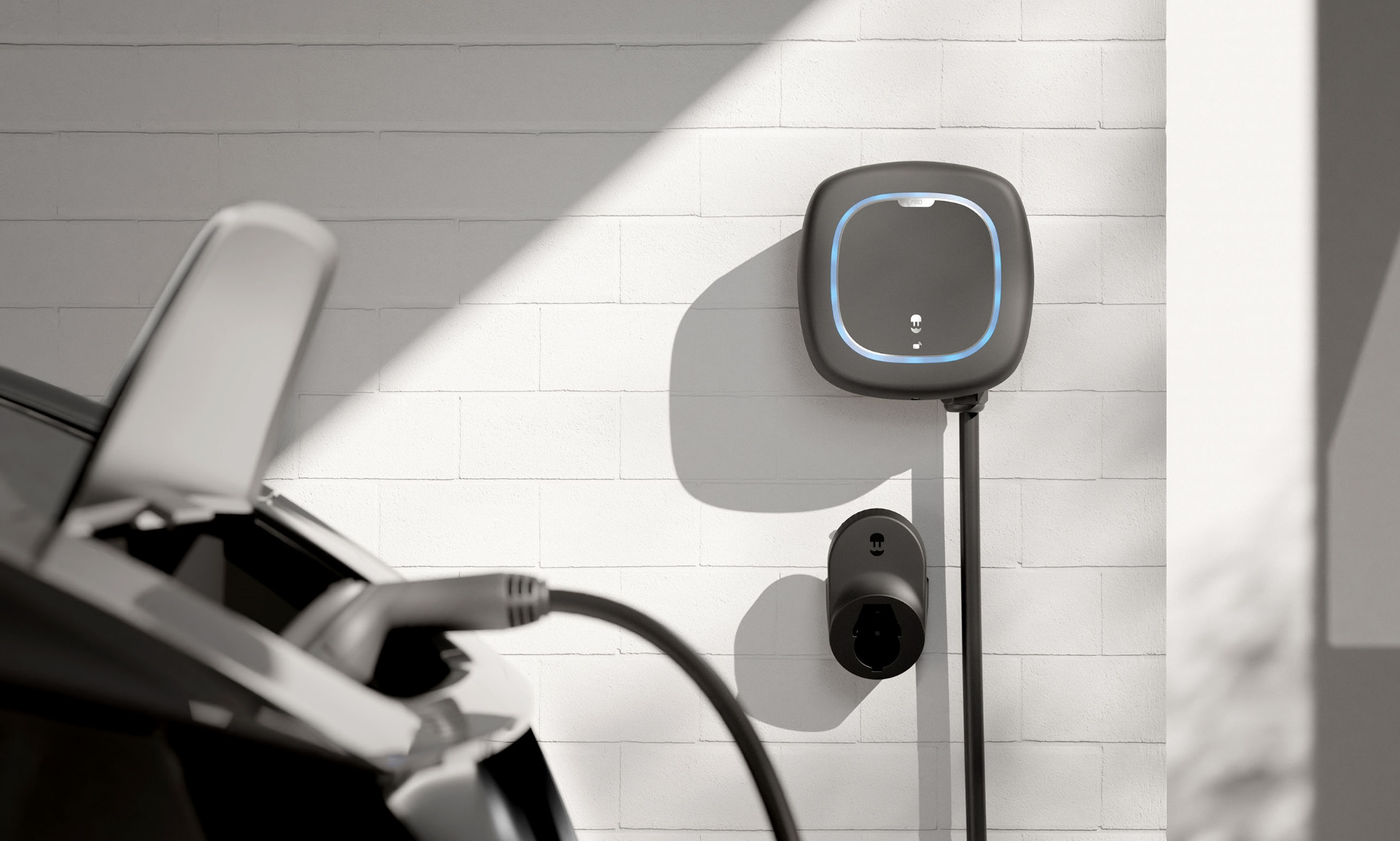
Every vehicle the OEM sells is a Demand Partner asset. The in-car HMI is the distribution channel. When the driver needs to charge, the vehicle surfaces available public chargers — from every network — priced at their public tariff, with the session initiated directly from the dashboard. The driver plugs in. The session completes. The payment is handled by the financial infrastructure beneath the integration, at the CPO's transparent price, with no markup inserted between the station and the driver. A revenue share per session flows back to the OEM. The driver sees the cost on their OEM account statement. The OEM earns on the session without operating the charger that delivered it. The transaction layer that makes this clean is described in EV Charging Transaction Platform.
This is affiliate economics applied to the vehicle. Every plug-in is a transaction. Every transaction generates revenue for the OEM. The revenue per session is modest — this is not a headline-margin business and it was never meant to be — but the volume is consistent, compounds with the OEM's EV sales, and continues earning for the lifetime of each vehicle.
At scale, this produces a recurring revenue line that is independent of vehicle sales cycles, independent of proprietary infrastructure investment, and independent of the specific charging market conditions in any individual country. The OEM earns on sessions in every market where it sells vehicles, because the vehicle itself is the distribution channel and the public charging network is already there waiting for it. The cross-border picture for this is unpacked in How EV Charging Works Across Borders.
Why the vehicle is the right distribution point
There is a structural reason in-car charging monetisation outperforms app-based OEM charging monetisation, and it is worth naming explicitly.
The driver did not download the OEM's charging app voluntarily. They bought the vehicle. The app came attached. The engagement with the app is reluctant — drivers use it because the car requires it, not because the app is the best charging interface available. This is why OEM charging apps have historically underperformed on usage: drivers default to third-party apps that they chose, trust, and use across multiple vehicles and contexts. The same pattern applies to other embedded mobility plays — see Embedded Mobility Services for Fintechs.
The in-car HMI is different. The driver does not choose it — they are already inside it. They turn the car on and it is there. The charging interface on the dashboard does not need to compete with third-party apps for attention because the driver is sitting in front of it at the moment they need it. When the vehicle knows the battery is low and surfaces charging options through the dashboard, the driver acts on that prompt — whereas the same prompt arriving through the OEM's standalone mobile app would be ignored.
Plug and Charge — the vehicle-level authentication standard — extends this further. The driver does not initiate the session explicitly at all. They plug the vehicle in. The vehicle and the charger authenticate each other automatically. The session begins. The payment flows. The OEM earns on a session the driver did not have to think about, through an interface the driver was already using, at a location the driver was already going to be.
This is the mechanic that makes monetising in-car charging fundamentally different — and fundamentally better — than app-based monetisation. The OEM is inside the vehicle. The vehicle is inside the session. The session is inside the revenue flow. Everything else is infrastructure that somebody else should be operating.
The operational picture when it is done correctly
The OEM that has decided not to run a proprietary charging network, and has decided instead to treat its vehicle fleet as the demand asset it actually is, needs three things to capture the revenue available.
It needs access to every public charging network its drivers will realistically use. This is what a proper distribution layer provides — a single integration that gives the OEM's in-car interface commercial access to every CPO on the network, across every market the vehicles are sold into. The OEM does not negotiate per-CPO agreements. The network expands through the platform's own CPO additions, not through the OEM's bilateral effort.
It needs the sessions to settle cleanly. Every session routed through the vehicle should result in a revenue share arriving in the OEM's account on a short, predictable cycle. If the settlement picture is slow, opaque, or requires reconciliation effort from the OEM's own team, the revenue line is diminished by operational friction that the OEM should not be absorbing.
It needs the compliance layer handled. Charging sessions generate VAT obligations, invoicing requirements, audit evidence needs, and jurisdiction-specific regulatory duties that vary per country. The OEM's core product is building cars, not handling multi-jurisdiction financial compliance for a high-volume transaction business. These obligations should be absorbed by the platform providing the distribution layer, not delegated back to the OEM.
When these three conditions are met, the OEM's charging strategy becomes simple. Sell cars. Route drivers to chargers through the vehicle's own interface. Earn on every session. No network to operate. No proprietary app to defend. No compliance team to build. A clean revenue line, compounding with the fleet, earning for the lifetime of each vehicle, without the cost structure that has historically made OEM charging operations underperform.
NetworkCore is the distribution layer that makes this work
This is the position NetworkCore is built for. The platform provides a single commercial and financial layer that connects OEMs — as Demand Partners — to every CPO on the network, across markets, with the complete session lifecycle handled by the infrastructure beneath the integration.
For an OEM joining the network, this means an in-car integration that gives the vehicle access to public charging across every CPO network connected to the platform, with sessions settled within 48 hours at the CPO's public tariff, revenue share earned per session, compliance handled across jurisdictions, and no infrastructure to build or operate on the OEM's side. The in-car HMI becomes the distribution point. The platform becomes the transaction layer. The revenue arrives. See how the platform works end to end.
There is no subscription fee for Demand Partners on the network. The platform earns a small commission per session — a marginal cost proportional to the transaction, payable only when the OEM earns. The commercial alignment is with the OEM's revenue, not extracted from it.
And because the network is built to scale globally — with CPOs added continuously across markets and the compliance and settlement architecture already handling multi-jurisdiction transactions — the OEM does not need to plan its charging strategy market by market. A single integration produces charging coverage across every market where the platform operates, and expands automatically as the platform expands.
This is what OEMs running demand rather than operating infrastructure looks like in practice. It is the charging monetisation strategy that matches the asset the OEM actually holds. And it is the strategy that the industry's next generation of EV vehicle platforms will increasingly adopt, as the economics of proprietary networks continue to diverge unfavourably from the economics of distribution.
The OEM decision, stated plainly
If you are an OEM considering how to monetise in-car charging, the decision is not which proprietary network to build, which CPOs to partner with exclusively, or which app to develop. The decision is whether to continue treating charging as an infrastructure business — which it is, for someone else — or to start treating it as a distribution business, which it is, for you.
Running demand is what OEMs are structurally good at. Running networks is what CPOs are structurally good at. The market rewards each participant for doing what they are structurally good at. It punishes the ones that try to do both.
Monetising in-car charging correctly is the application of this principle to the OEM's specific position. The vehicle is the distribution channel. The public charging network is the supply. The financial infrastructure layer — NetworkCore — is what makes the transaction work cleanly between them. And the OEM earns on every session, across every market, for the life of every vehicle, without operating any of the infrastructure that made those sessions possible.
Reach the team at networkcore.org.