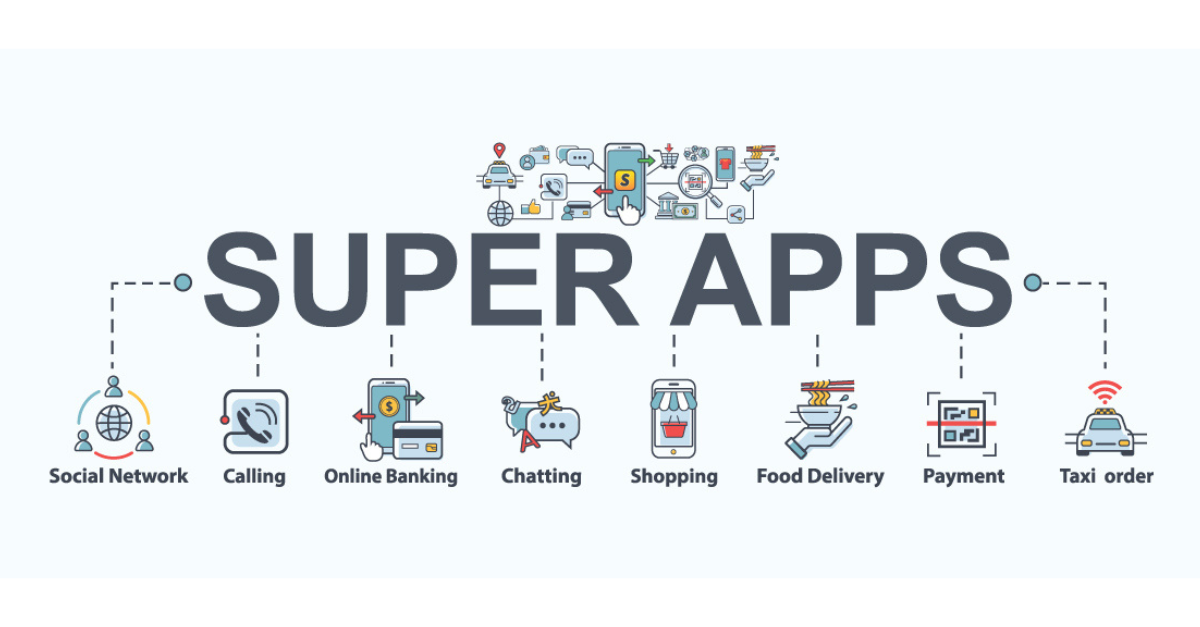
Every successful super app starts with the same ambition: become indispensable in everyday life.
Payments alone are not enough. Messaging alone is not enough. Even commerce, travel, or financial services eventually plateau. What separates super apps that scale from those that stall is how effectively they expand into embedded services that keep users inside the ecosystem, engaged frequently, and trusting the platform as a daily utility.
This is why super app ecosystem strategy is increasingly about choosing the right services to embed — not building everything, but embedding what matters most.
EV charging is emerging as one of those services.
What a Super App Ecosystem Strategy Is Really About
A modern super app ecosystem strategy is not about offering more features. It is about increasing relevance density.
The most successful super apps embed services that:
- Are used repeatedly
- Touch the physical world
- Reinforce trust
- Create passive, usage-based revenue
- Do not require the platform to own infrastructure
This is why payments, mobility, food delivery, insurance, and financial services have historically been at the core of super app strategies. They anchor the app in real life.
EV charging fits this pattern almost perfectly.
Why EV Charging Fits Naturally Into a Super App Ecosystem
EV charging is not a niche feature. As EV adoption grows, charging becomes a recurring, unavoidable interaction for millions of users.
From a super app ecosystem strategy perspective, EV charging has several unique characteristics:
- It is high-frequency but low-friction
- It is tied to daily mobility
- It happens in moments where users already reach for their phone
- It has a clear transactional value
- It aligns naturally with payments and wallets
Most importantly, EV charging does not need to be owned to be offered.
EV Charging as an Embedded Service, Not an Infrastructure Play
This distinction is critical.
Super apps should not:
- Build charging networks
- Install chargers
- Operate hardware
- Manage energy pricing
- Handle regulatory complexity
That is not what a super app ecosystem strategy is about.
EV charging only makes sense for super apps as an embedded service — delivered through a platform that already connects charging supply, handles payments, and manages settlement. In this model, the super app stays focused on users and experience, while the underlying platform carries the operational and financial complexity. NetworkCore offers exactly this: EV Charging as a Service.
Passive Revenue That Aligns With User Trust
One of the hardest challenges in any super app ecosystem strategy is monetisation without eroding trust.
EV charging, when done correctly, offers something rare: passive, usage-based income that does not rely on hidden margins.
With NetworkCore, EV charging is offered at public prices. The driver sees the same price they would see elsewhere. There are no artificial markups added by the platform.
The super app earns a percentage of each charging session, paid by NetworkCore, not by inflating prices for the user.
This matters. Trust compounds. Once users believe your app gives them fair access to real-world services, they stay.
Staying Relevant in the Physical World
The strongest super app ecosystem strategies extend beyond the screen.
Payments happen everywhere. Mobility happens everywhere. Charging happens everywhere.
By embedding EV charging, super apps remain present in:
- Daily commutes
- Road trips
- Parking moments
- Urban mobility
- Fleet and shared vehicle use
These are high-value touchpoints that reinforce relevance long after the initial app install.
EV charging keeps users inside your app, rather than pushing them to specialised charging apps or fragmented solutions.
We've Seen This Playbook Work Before
We are not yet at the stage where EV charging is a default feature in every super app — but the direction is clear.
Successful super apps such as Grab, Gojek, Alipay, or WeChat did not succeed by building infrastructure. They embedded services that already existed, wrapped them in trusted UX, and monetised usage at scale.
EV charging follows the same logic.
As mobility electrifies, charging becomes as fundamental as fuel once was — but with far more digital surface area.
This is where the next evolution of super app ecosystem strategy is heading.
Why NetworkCore Exists in This Strategy
NetworkCore is built specifically to enable EV charging as an embedded service for platforms that already have demand.
It acts as a roaming hub and settlement layer, connecting:
- Demand from super apps, wallets, platforms, OEM ecosystems
- Supply from public charging networks across regions
Through a single integration, NetworkCore allows super apps to:
- Offer EV charging access
- Stay on public prices
- Earn a percentage of each charging session
- Avoid infrastructure ownership
- Avoid operational and regulatory burden
From a strategy perspective, NetworkCore is not a feature vendor. It is ecosystem infrastructure.
Why This Matters Now
A super app ecosystem strategy only works if it anticipates where user behavior is going — not where it has been.
EV adoption is accelerating. Charging is becoming a daily necessity. Users will expect their primary financial or mobility app to support it, just as they expect payments, transfers, or transport today.
Super apps that move early can:
- Capture habitual usage
- Build long-term trust
- Monetise without friction
- Stay relevant as mobility electrifies
Those that wait risk being disintermediated by more focused platforms.
Super App Ecosystem Strategy Is About Choosing the Right Layer
The smartest super app ecosystem strategies do not try to do everything. They choose the right layer to own.
EV charging does not need to be owned physically. It needs to be owned experientially.
NetworkCore makes that possible by handling the invisible complexity, while super apps focus on what they do best: users, trust, and scale.
Final Thought
A strong super app ecosystem strategy is not about more features. It is about deeper integration into everyday life.
EV charging, offered as an embedded service, checks every box:
- High frequency
- Physical relevance
- Passive income
- Trust alignment
- Ecosystem fit
NetworkCore exists to make this integration simple, scalable, and fair — for users, for platforms, and for the charging ecosystem.
For super apps thinking about their next chapter, EV charging is no longer a future idea. It is a present opportunity.