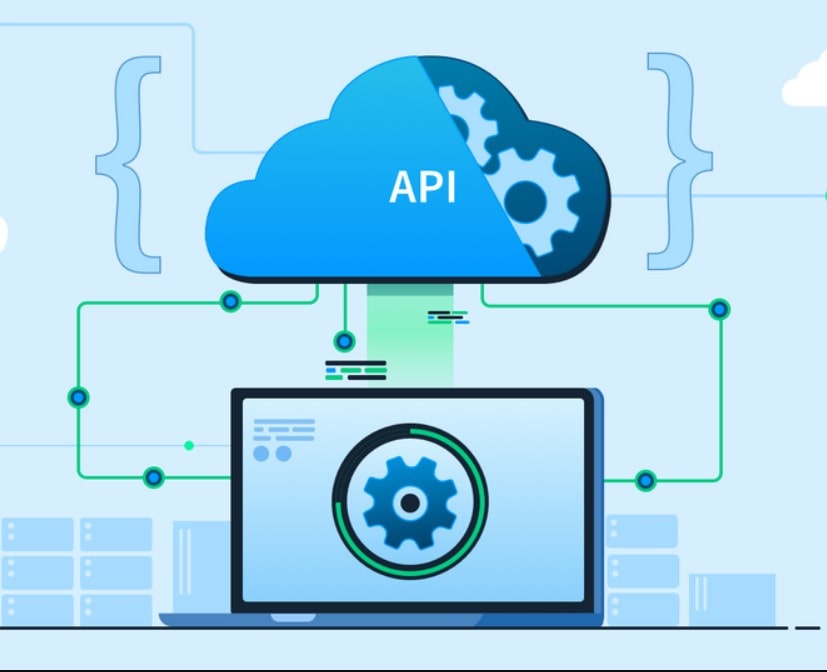
EV Charging as a Service Platform: What It Actually Means — and What Most Things Called This Are Not
Most products called an EV charging as a service platform aren't one. Here's what the term should mean — and the structural conditions a real platform has to clear.
The conclusion first: an EV charging as a service platform is, when the phrase is used accurately, the layer that lets a business with EV-driving users offer charging to those users without owning chargers, building a CSMS, negotiating with CPOs, or absorbing the compliance burden of operating a multi-jurisdiction transaction layer. Most of what the market currently calls an EV charging as a service platform does not deliver this. The genuine version is rare. NetworkCore is built for it. This post explains the difference and what platforms with users — fleets, OEMs, fintechs, wallets, super-apps, mobility platforms, insurers — should actually be looking for.
What an EV charging as a service platform should mean
The "as a service" framing is borrowed from the software industry, where it means a clean and recognisable thing: a customer accesses a capability they want to offer, without operating the infrastructure that delivers it, paying only for the consumption that occurs and not for the infrastructure that sits behind the consumption. The customer's product gets the capability. The provider's infrastructure does the work. The economics scale with usage rather than with capex.
Applied to EV charging, this should mean a platform with EV-driving users — a fleet operator, an OEM, a fintech, a wallet, a super-app, a corporate benefits provider, a mobility platform — offering charging access to those users as a native feature of its own product, while a third party operates everything beneath the integration: the connection to public charging networks, the routing of sessions to chargers, the capture of payment, the application of pricing, the allocation of revenue, the settlement to all parties, the multi-jurisdiction VAT and compliance layer, and the audit infrastructure. The platform offers charging. The provider provides charging. The user charges. The economics scale per session, not per megawatt of installed infrastructure.
This is the working definition of an EV charging as a service platform. It is straightforward to state and notoriously rare to find in the market. The same demand-not-infrastructure logic underpins our argument in Offer EV Charging Without Owning Chargers.
What is currently being sold as "EV charging as a service" — and what it actually is
The category has been crowded by a number of products that use the phrase loosely or repurpose it for offerings that do not match the working definition above. Naming each of them is the cleanest way to clarify what a genuine EV charging as a service platform is and is not.
Hardware leasing dressed as a service. A common offering: a vendor finances the deployment of physical chargers on the buyer's site or behalf, charging an ongoing fee that includes the hardware cost amortised across a contract period plus a maintenance and operations component. This is a reasonable business model — for some customers it is the right structure for site-level deployment — but it is not an EV charging as a service platform in the meaningful sense. It is capex disguised as opex, locking the buyer into ownership and operational responsibility for physical infrastructure they then have to fill with sessions. The buyer is now a small CPO with leased equipment. They have not been freed from the infrastructure burden; they have rented it.
White-label CSMS licensing. Another common offering: a software vendor provides a charge station management system under the buyer's branding, allowing the buyer to look like a charging operator while the underlying platform handles the technical operation. This is real software, often well-built, and the right answer for some operators. It is not, however, charging as a service for the platform with users — the platform still has to acquire chargers, configure tariffs, manage roaming, handle pricing, run customer support for charging, and absorb the compliance overhead of operating in the financial flow. The CSMS is the operational tool. The platform is still the operator. We unpack the orchestration alternative in EV Charging Orchestration Platform.
Subscription roaming hubs. The traditional roaming layer connects CPOs to eMSPs through technical data exchange, charging both sides annual or monthly fees regardless of utilisation. This is sometimes positioned as a service offering. It solves connectivity. It does not solve money. The Demand Partner connecting through a roaming hub is responsible for everything that happens to the financial flow of the session after the data exchange completes — invoicing, VAT, settlement, reconciliation, FX, compliance. The hub is a directory and a translator. It is not a service in the as-a-service sense — see How EV Charging Works Across Borders for the full breakdown of why roaming solves data but not money.
Bilateral CPO partnerships. Some platforms with users offer charging by negotiating directly with one or two CPOs, building a branded experience that gives their drivers access to that CPO's network. This is a partnership, not a service. It is bounded by the partner's geographic coverage, locked into the partner's commercial terms, and operationally fragile if the relationship changes. The platform spent significant time building the integration. It is now exposed to a single network's footprint and pricing. Scaling it requires duplicating the entire effort with each new CPO partner.
Charging-as-a-Service in the CPO sense. There is a separate, legitimate use of the term that refers to CPO infrastructure deployed for site hosts — landlords, retail locations, fleets — under a managed-service model where the CPO operates and maintains chargers on the host's site and shares revenue. This is the Charging-as-a-Service model the industry uses for site-level deployment, and it is genuinely a service. But it is a service to site hosts, not to platforms with users. The two propositions are different. The phrase is the same. The customer profile is not.
The pattern across all of the above: the term "as a service" is being applied to offerings that retain operational complexity for the buyer. None of them deliver the experience that the phrase implies, which is access to a capability without the infrastructure burden of operating it.
What a true EV charging as a service platform requires
A genuine EV charging as a service platform — for a business with users, looking to offer charging as a native feature without acquiring an infrastructure operation — has to clear a specific set of conditions. Each of these is structural; absence of any one means the offering is not actually as-a-service in the meaningful sense.
Network breadth without bilateral negotiations. The platform must gain access to a wide network of CPOs through a single integration. If extending coverage requires the platform to negotiate with new CPOs as the network grows, it is not a service — the platform is doing the work the service is supposed to handle. A genuine EV charging as a service platform expands automatically as the underlying provider adds CPOs.
Public price enforcement. The driver must pay the CPO's published public tariff. If an intermediary is inserting margin between the CPO and the driver, the offering is a markup business, not a service business — and it is sustaining itself by extracting trust the platform's users will eventually withdraw. Pricing transparency is structural to a real as-a-service model.
Per-session economics, not subscription. The platform pays only for the value that flows through the service. Subscription fees that are owed regardless of utilisation are infrastructure costs in disguise — they break the as-a-service economic model and shift risk back onto the platform.
Settlement absorbed by the provider. The platform earns its revenue share on each session, settled cleanly and quickly, without managing the financial flow itself. If the platform is invoicing CPOs, reconciling reports, or handling delayed roaming-style settlement cycles, it is operating financial infrastructure — which is precisely what the as-a-service model is supposed to eliminate. The transaction layer this requires is described in EV Charging Transaction Platform.
Compliance handled across jurisdictions. Multi-market operation produces multi-jurisdiction tax, invoicing, and regulatory obligations. A real EV charging as a service platform absorbs these into the provider's infrastructure. A non-real one delegates them back to the platform with users, who then has to build a compliance team to handle a function that was supposed to be outsourced.
Driver experience native to the platform. The session should start and finish inside the platform's own product — its app, its in-car HMI, its fleet management interface, its wallet. If the user is being redirected to a third-party charging app to complete the session, the platform has not actually offered charging as a service. It has offered a referral. This is the same logic we apply to OEM distribution in Monetising In-Car Charging.
These conditions, taken together, define an EV charging as a service platform in its meaningful sense. They are also the specification NetworkCore is built to.
Programmable commercial terms: the dimension most "as-a-service" offerings miss
There is one further capability that distinguishes a genuine EV charging as a service platform from the alternatives, and it is the dimension most platforms with users do not realise is available to them at all.
A real EV charging as a service platform is programmable at the commercial layer. This means that on top of the public price baseline — the CPO's transparent published tariff, applied to all standard sessions — individual Demand Partners and individual CPOs can negotiate preferred commercial terms for sessions between them, without compromising the public pricing position for any other participant on the network.
In practical terms, a fleet platform might negotiate a preferential rate with a specific CPO that operates densely in the cities where the fleet's vehicles drive most often. An OEM might agree a discount with a fast-charging network whose footprint matches the corridors its drivers use. A wallet might secure a loyalty rate with a CPO at certain locations to offer its users a benefit. In each case, the public tariff remains the baseline visible to every other driver on the network, and the negotiated arrangement applies transparently to the specific Demand Partner and CPO who agreed it. The audit trail is complete. The settlement logic is identical to standard sessions. The pricing is properly recorded against the right counterparties.
This is not a routing trick or a markup mechanism. It is a properly structured commercial framework — the first of its kind in the EV charging market — that lets Demand Partners and CPOs build durable bilateral economics on top of the network's public pricing without breaking the transparency that makes the public pricing model work in the first place.
It is also a capability that no other platform claiming to offer EV charging as a service currently provides. Roaming hubs cannot do it because their commercial layer is not built for it. White-label CSMS products cannot do it because they are operating a single CPO's infrastructure, not coordinating multiple. Bilateral CPO partnerships cannot do it because they are, by definition, a single bilateral relationship rather than a network with programmable bilateral overlays. Hardware leasing offerings cannot do it because they are a deployment model, not a transaction platform. NetworkCore is the only EV charging as a service platform in the market with this functionality available to its participants — and the existence of this layer is one of the clearest signals that the platform was built for the actual problem rather than retrofitted from an adjacent product category.
Why "demand + the right platform" is the only equation that works
A platform with EV-driving users — and there are a lot of them, across categories — already holds the asset that matters most in this market: demand. Drivers who will charge, repeatedly, for the lifetime of their vehicles. The platforms holding this asset have been told for several years that capturing it requires building or licensing infrastructure. This is not true. It has never been true. It is the consequence of a market in which the genuine alternative — an EV charging as a service platform in the meaningful sense — was not yet available.
The actual requirement is much simpler: demand on the platform side, and the right platform on the infrastructure side. The platform with users connects through a single integration. The infrastructure platform handles every other aspect of the charging session, end to end, across markets. The session happens. The platform earns. The driver charges. No infrastructure has been built or licensed. No CSMS has been deployed. No bilateral CPO agreements have been negotiated. No compliance team has been hired. The fintech-side framing of the same opportunity is in Embedded Mobility Services for Fintechs.
This is what "you do not need infrastructure to offer charging — you need demand and the right platform" actually means. It is a structural truth about how this market is now organised, not a marketing line. The companies that have understood it are capturing the EV charging revenue available on their user bases without acquiring an operation they do not want and were never built to run.
NetworkCore is the EV charging as a service platform this works through
NetworkCore is the EV charging as a service platform for businesses with users. Not a CSMS. Not a roaming hub. Not a hardware leasing programme. The financial and commercial infrastructure that connects platforms with EV-driving users to the public charging networks those users will charge on, with the entire transaction lifecycle handled by the layer beneath the integration.
For a platform joining the network, the offering is what an EV charging as a service platform should always have meant: one integration, no infrastructure to operate, transparent revenue per session, settlement on a short cycle, public price enforcement as the baseline with programmable bilateral arrangements available where the commercial relationship warrants it, multi-jurisdiction compliance handled automatically, and access to a network of CPOs that grows continuously without the platform having to do anything to extend coverage. There is no subscription fee. The commercial model is per-session — a transparent commission proportional to the value of each transaction, payable only when the platform earns. See Demand Partners for the full proposition.
For CPOs participating on the network, the offering is access to demand without bilateral negotiations as a default, settlement within 48 hours at the CPO's published public tariff, optional negotiated arrangements with specific Demand Partners where it makes sense for the CPO's commercial interests, and a model where the platform earns only when the CPO earns. The alignment is structural rather than promised. The CPO-side terms live on Charge Point Operators.
The result is what the market has been calling EV charging as a service for years and what very few products in the market have actually been delivering. A genuine service layer. A platform that can offer charging without owning chargers. A revenue line that compounds with the platform's user base. An infrastructure burden absorbed entirely by the layer that was built to absorb it. Bilateral commercial flexibility built on top of public pricing, not in place of it.
The simple test for any platform evaluating its options
If a business with EV-driving users is evaluating how to offer charging, the test for any proposed solution is short.
Does the offering require the platform to own physical chargers? If yes, it is not an EV charging as a service platform. It is hardware acquisition.
Does the offering require the platform to negotiate with individual CPOs to extend coverage? If yes, it is not an EV charging as a service platform. It is partnership management.
Does the offering require the platform to handle invoicing, VAT, settlement, or compliance for charging sessions across jurisdictions? If yes, it is not an EV charging as a service platform. It is a financial operation the platform has been asked to run.
Does the offering charge a subscription fee that is owed regardless of utilisation? If yes, it is not an EV charging as a service platform in the meaningful sense. It is an infrastructure cost positioned as a service fee.
Does the offering let the platform's users charge through the platform's own interface, at the CPO's public tariff, with the revenue share arriving cleanly per session, and with the option to negotiate preferred commercial terms with specific CPOs where it adds value? If yes — and only if all four prior tests came out negative — it is genuinely an EV charging as a service platform.
NetworkCore is built to pass this test. It is the only platform of its kind that does — and the only one a business with users can integrate to, today, and start offering charging without acquiring a single piece of infrastructure or operational responsibility along the way. See How It Works for the architecture in detail.
The platforms that have already connected understand this. The ones that have not are evaluating offerings that look similar on the surface and operate entirely differently underneath.
Reach the team at networkcore.org to discuss what an EV charging as a service platform actually looks like for your specific position in the market.