Fleet EV Charging Payments: Why Fleets Don't Need Chargers Everywhere — They Need Charging Everywhere
Fleet EV charging payments are quickly becoming one of the defining challenges of fleet electrification. The real bottleneck isn't infrastructure — it's economics.
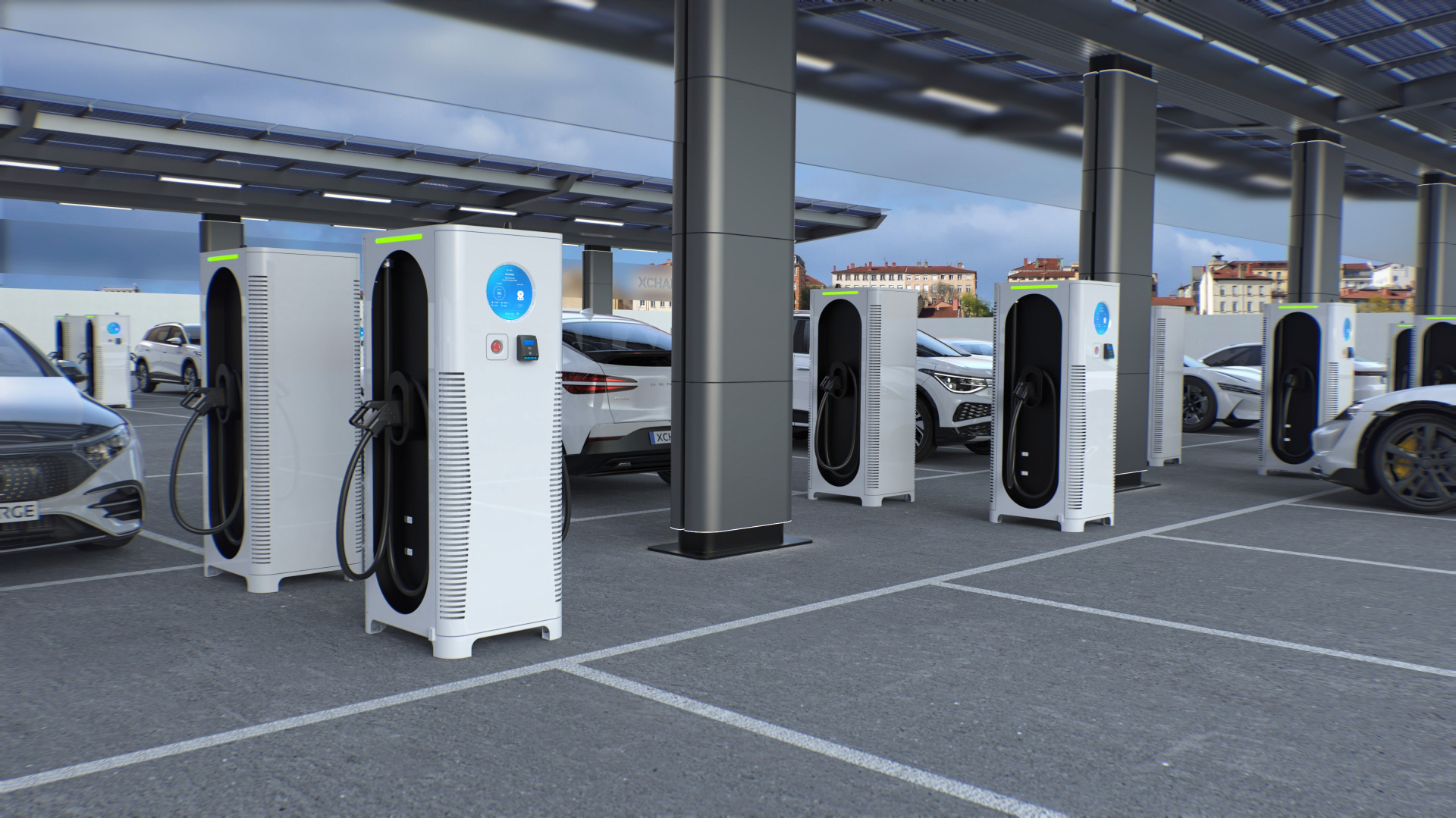
Fleet EV charging payments are quickly becoming one of the defining challenges of fleet electrification.
Most conversations still focus on hardware. Depot buildouts. Charger density. Installation strategy.
But the real bottleneck isn't infrastructure.
Fleets don't need chargers everywhere.
They need charging everywhere.
And they need fleet EV charging payments that scale without punishing growth.
The Real Problem Is Not Access — It's Economics
Roaming has made access possible. Through an EV roaming hub, fleets can technically charge across multiple networks.
But fleet EV charging payments are rarely designed with fleet economics in mind.
Traditional roaming solutions were built around SaaS models. The larger the fleet, the higher the fixed fees. Per-vehicle pricing. Per-connector pricing. Subscription tiers.
That structure may work for small deployments.
It breaks down at scale.
When a fleet grows from 50 vehicles to 5,000, its platform fees often grow proportionally — regardless of efficiency gains. Electrification should reduce operating costs, not introduce scaling penalties.
Why Roaming Alone Doesn't Solve Fleet Charging
An EV roaming hub connects networks. It exchanges data. It authorises sessions.
But fleet EV charging payments involve much more than technical connectivity.
They involve:
- Cost predictability
- Cross-border settlement
- VAT handling
- Cash flow timing
- Payment centralisation
- Reconciliation simplicity
When roaming is layered onto a SaaS billing model, fleets pay both for access and for growth.
This is not aligned with how fleet businesses operate.
Fleets Don't Need Chargers Everywhere
Installing chargers at depots makes sense for predictable routes. But fleets are dynamic. Vehicles move. Routes evolve. Drivers cross cities and borders.
Owning chargers everywhere creates capital rigidity.
Accessing charging everywhere creates operational flexibility.
Fleet EV charging payments must reflect this reality. Charging should be accessible through public networks, priced transparently, and settled efficiently — without locking fleets into infrastructure-heavy commitments.
This is the core logic behind fleet charging as a service. It shifts the focus from ownership to access.
The Structural Issue with SaaS-Based Roaming
Most traditional roaming hubs charge fleets in ways that scale with size, not usage.
Common structures include:
- Fixed subscription fees
- Per-vehicle or per-connector pricing
- Tiered SaaS plans
As fleets grow, their platform burden increases, even if their per-kilometer costs improve.
Fleet EV charging payments should scale with actual charging activity — not with fleet headcount.
A Transactional Model Changes the Equation
NetworkCore approaches fleet EV charging payments differently.
Instead of fixed SaaS pricing, NetworkCore operates on a purely transactional model.
If charging happens, value is created and shared.
If charging does not happen, there are no fixed platform fees.
Whether a fleet operates two vehicles or two million vehicles does not change the structure. Growth does not increase subscription cost. Scale is not penalised.
This aligns directly with how fleet managers think: cost per use, not cost per vehicle.
Public Pricing and Real Transparency
Fleet managers care deeply about transparency.
One of the persistent issues in fleet EV charging payments is markup layering. Roaming fees and indirect pricing distortions make reconciliation difficult.
NetworkCore operates strictly on public charging prices. The fleet pays the public tariff and benefits from negotiated public discounts where applicable. There are no artificial pricing layers added by the platform.
For fleet managers, this simplifies budgeting and internal reporting. For drivers, it builds trust.
Settlement Speed Matters
Cash flow is critical in fleet operations.
Slow settlement cycles tie up working capital. Manual reconciliation increases administrative overhead. Cross-border charging adds FX and VAT complexity.
By integrating roaming with clearing and settlement, NetworkCore reduces this friction. Charging sessions are routed, cleared, and settled within a unified structure.
Fleet EV charging payments become predictable instead of fragmented — a prerequisite for scaling Mobility as a Service.
Connecting to the Bigger Picture
If you've read our earlier pieces on EV charging as a service or EV roaming hub explained, the pattern becomes clear.
Roaming is necessary, but not sufficient.
Fleet EV charging payments require a model where incentives align across CPOs, fleets, and demand platforms. When the platform earns only when charging happens, scale becomes sustainable.
This is especially important for cross-border fleets and corporate mobility programs, where charging must work across regions without renegotiating infrastructure every time.
Final Thought
Fleet EV charging payments are not a technical detail. They are a strategic lever.
Fleets don't need chargers everywhere.
They need charging everywhere — priced fairly, settled quickly, and structured for growth.
NetworkCore integrates roaming, clearing, and settlement into a transactional model where fleet size does not increase platform cost and public pricing remains transparent.
That is how fleet charging becomes scalable.